Fast vs Standard iPhone Chargers
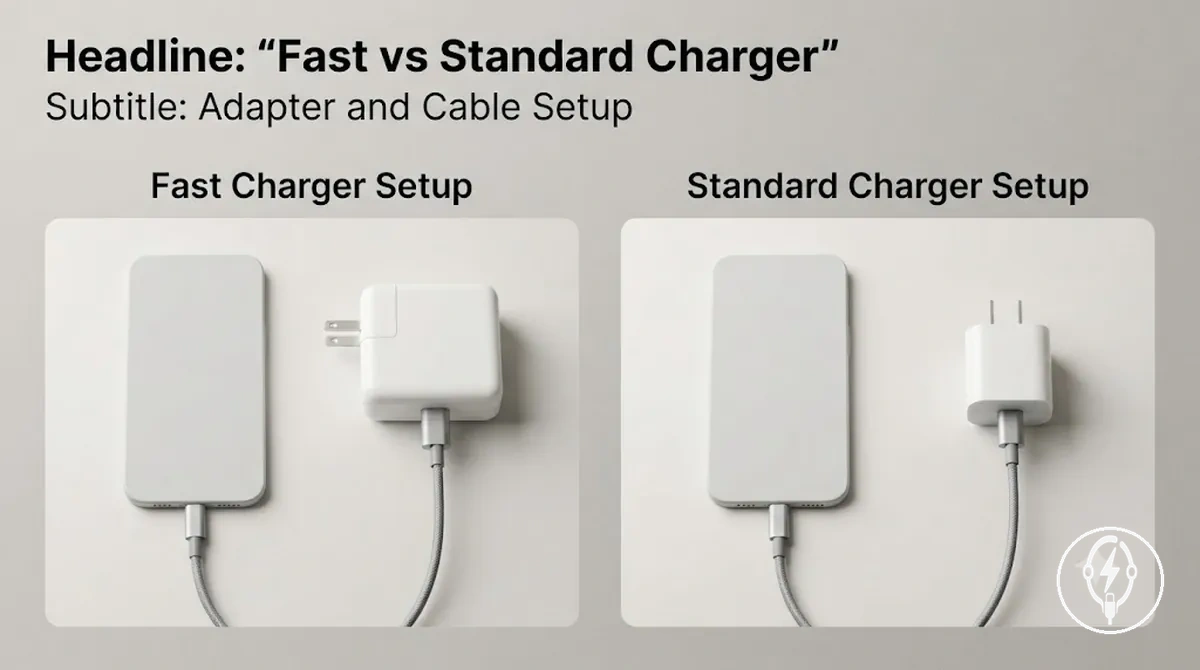
Fast and standard iPhone chargers differ primarily in charging speed, supported power output, and the hardware required to deliver that power. A fast charger uses a USB-C power adapter that supports USB Power Delivery (USB-PD) together with a compatible USB-C cable and an iPhone model that supports fast charging, while a standard charger delivers lower power for routine charging. According to Apple, compatible iPhone models can charge to approximately 50% battery in around 30 minutes when paired with a 20 W or higher USB-C power adapter under Apple's published test conditions. The choice between a fast charger and a standard charger therefore depends on charging speed, charger wattage, cable compatibility, battery level, heat, and daily charging routine.
For broader charging guidance beyond this comparison, visit the iPhone charging accessories hub .
A fast charger is the better option when reducing charging time is the priority, while a standard charger suits situations where charging speed is less important, such as overnight charging. Apple specifies that actual charging speed depends on the iPhone model, adapter wattage, USB-C cable compatibility, battery percentage, and device temperature because iPhone charging automatically slows as the battery fills or if heat increases. For broader charging guidance beyond this comparison, visit the iPhone charging accessories hub. The appropriate charger therefore depends on your charging routine rather than one charger being universally better.
The appropriate charger therefore depends on your charging routine rather than one charger being universally better.
For example, according to Apple, an iPhone connected to a compatible 20 W USB-C Power Delivery charger can reach approximately 50% battery in about 30 minutes under standard testing conditions, whereas a lower-power standard charger requires substantially longer to reach the same battery level because it supplies less power. In practical use, this means a fast charger provides the greatest benefit during short charging sessions, while the difference becomes less noticeable as the battery approaches full charge because iPhone charging automatically reduces charging speed to help manage battery condition and heat.
Table of Contents
What Fast and Standard Charging Mean for iPhone
Fast charging is an iPhone charging mode that uses sufficient adapter output together with compatible cable support to deliver power to the battery more quickly, while standard charging is a lower-power charging mode that charges the battery at a more gradual rate. According to Apple, supported iPhone models can use fast charging when connected to a compatible USB-C Power Delivery power adapter and the appropriate cable for that model, whereas standard charging operates with lower-power charging setups. These definitions distinguish fast charging from standard charging without implying identical charging performance across every iPhone model.
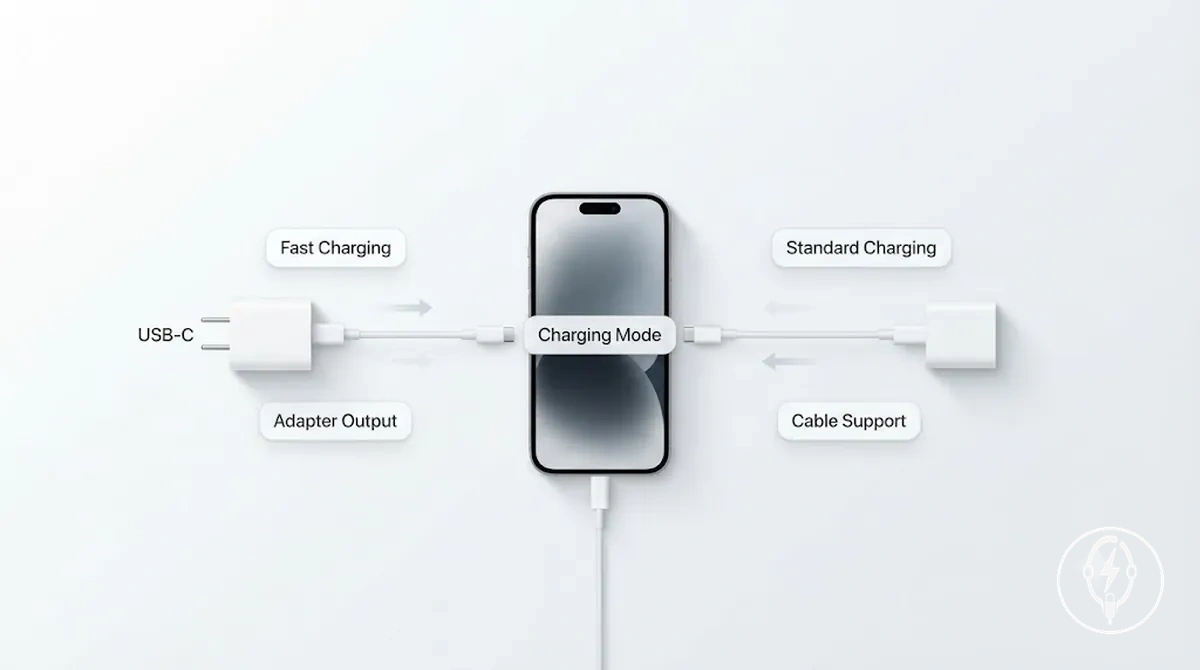
What Fast and Standard Charging Mean for iPhone is easier to understand by comparing the two charging modes rather than comparing charger products. The table below clarifies the differences in charging mode, adapter output, cable support, and practical charging behaviour.
| Charging mode | Adapter output | Cable support | Practical charging behaviour |
|---|---|---|---|
| Fast charging | Apple specifies a USB-C power adapter rated at 20 W or higher for supported iPhone models. | Compatible USB-C cable, or USB-C to Lightning cable for supported Lightning-equipped iPhone models. | According to Apple, supported iPhone models can reach up to 50% battery in about 30 minutes under Apple's test conditions, with charging speed reducing as battery level increases or device temperature rises. |
| Standard charging | Lower-power power adapter below Apple's fast-charging recommendation. | Compatible charging cable matched to the iPhone connector. | Battery charge increases more gradually throughout the charging session and is commonly used for routine or overnight charging. |
According to Apple, adapter output, cable support, battery state, device temperature, and the specific iPhone model all influence charging behaviour, so the same charger does not produce identical results on every device. This section defines fast charging and standard charging as charging modes only and does not rank charger products or recommend one charger over another.
Charging Speed Differences in Real Use
Charging speed differences in real use are most noticeable during the early stage of charging when a compatible fast charger, suitable adapter output, supported cable, and the iPhone's charging limits allow higher power delivery. According to Apple, supported iPhone models can charge to up to 50% in around 30 minutes when paired with a 20 W or higher USB-C power adapter under Apple's specified testing conditions. In everyday use, charging speed is determined by battery percentage, adapter output, cable support, device limits, and temperature rather than by the charger alone.
Charging Speed Differences in Real Use become easier to understand when early charging and near-full charging are compared side by side.
Charging Speed Differences in Real Use become easier to understand when early charging and near-full charging are compared side by side. The diagram below highlights how charging behaviour changes throughout a charging session instead of implying one constant charging speed.
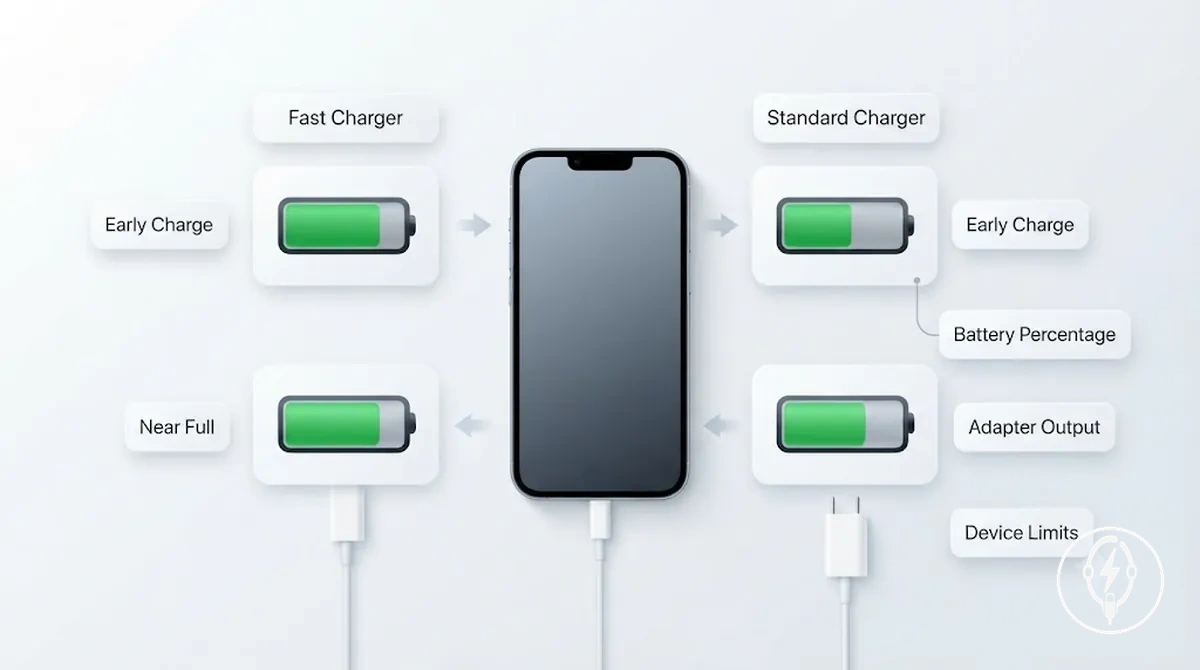
The table below organises the most common charging situations that influence charging speed in real use and shows why the visible difference changes as battery percentage increases.
| Charging situation | Main factor | Expected difference | Qualification |
|---|---|---|---|
| First 30 minutes with a low battery percentage | Adapter output, cable support, wattage, and device limits | The largest visible charging speed advantage occurs when a compatible fast charger and supported charging setup are used. | According to Apple, the published result of up to 50% charge in about 30 minutes applies only to supported iPhone models tested with a 20 W or higher USB-C power adapter under specified conditions. |
| Battery approaching full charge | Battery management and heat control | The charging speed difference becomes progressively smaller because charging current is intentionally reduced. | Apple states that iPhone automatically slows charging near full capacity to help manage battery condition and temperature. |
During the early charge, higher adapter output allows the iPhone to accept more power while the battery percentage is low, provided the cable and charging hardware support that level of power delivery. For example, Apple's published testing shows that supported iPhone models can reach up to 50% charge in about 30 minutes under the specified fast-charging conditions, making short charging sessions noticeably more effective than when using a lower-power standard charger.
As the battery percentage rises, the iPhone gradually reduces charging current regardless of whether a fast charger or standard charger is connected.
As the battery percentage rises, the iPhone gradually reduces charging current regardless of whether a fast charger or standard charger is connected. This battery management behaviour limits heat generation and helps preserve long-term battery health, so the practical charging speed advantage is greatest during the first part of the charging session and becomes much smaller near a full charge.
First 30 Minutes vs Full Charge Time
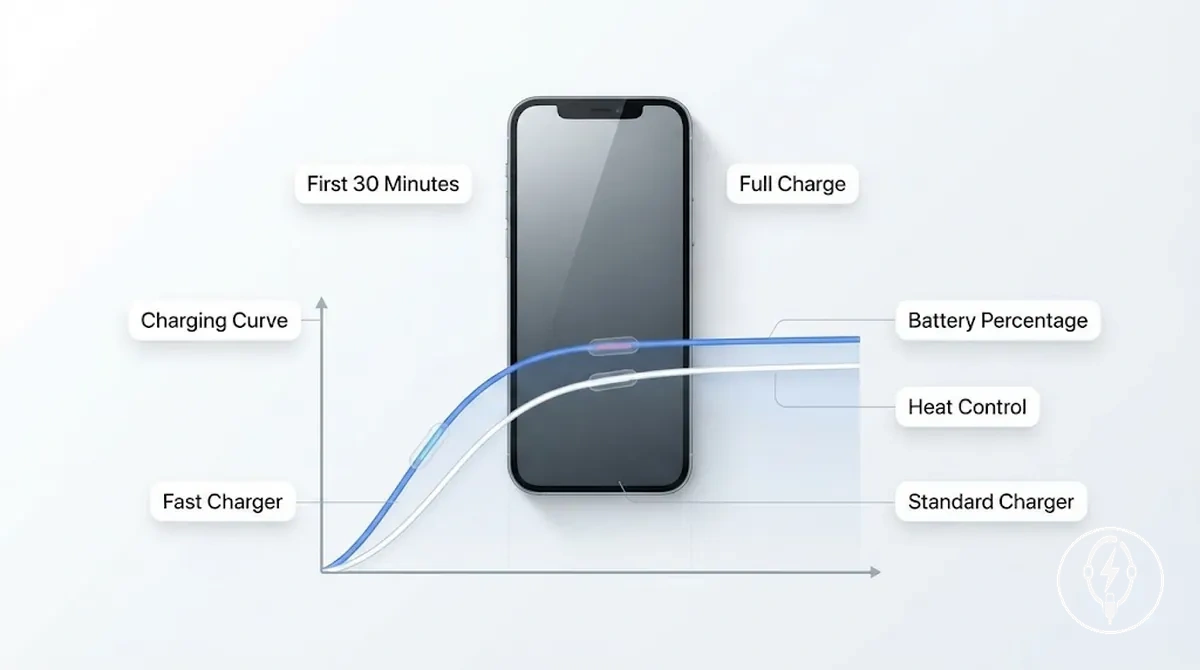
The first 30 minutes of iPhone charging usually show the largest increase in battery percentage, while full charge time is longer because the charging curve intentionally slows during the final charging stage. According to Apple, supported iPhone models can charge to up to 50% in about 30 minutes when used with a compatible 20 W or higher USB-C power adapter under Apple's specified test conditions. Apple does not publish a universal full charge time because the total charging duration depends on the iPhone model, battery percentage, temperature, adapter output, cable support, and device-managed charging behaviour.
The diagram below illustrates why charging speed changes throughout the charging session rather than remaining constant.
First 30 Minutes vs Full Charge Time becomes easier to understand when the charging curve is divided into an early charging stage and a later charging stage. The diagram below illustrates why charging speed changes throughout the charging session rather than remaining constant.
The comparison below highlights how early charging differs from the final charging stage.
- First 30 minutes: According to Apple, supported iPhone models can reach up to 50% battery in about 30 minutes when paired with a compatible 20 W or higher USB-C power adapter under Apple's published testing conditions, making this the fastest part of the charging curve.
- Full charge time: Battery percentage increases more gradually because device-managed charging reduces charging current as the battery approaches full capacity to support heat control and battery management.
- Charging curve: The visible speed advantage of a fast charger is greatest during early charging and progressively decreases during the final charging stage as charging current is reduced.
- Qualification: Total charging time varies with the iPhone model, battery condition, ambient temperature, adapter output, and cable compatibility, so Apple's published fast-charging result should not be interpreted as a universal full-charge duration.
Wattage, USB-C Power Delivery, and Cable Requirements
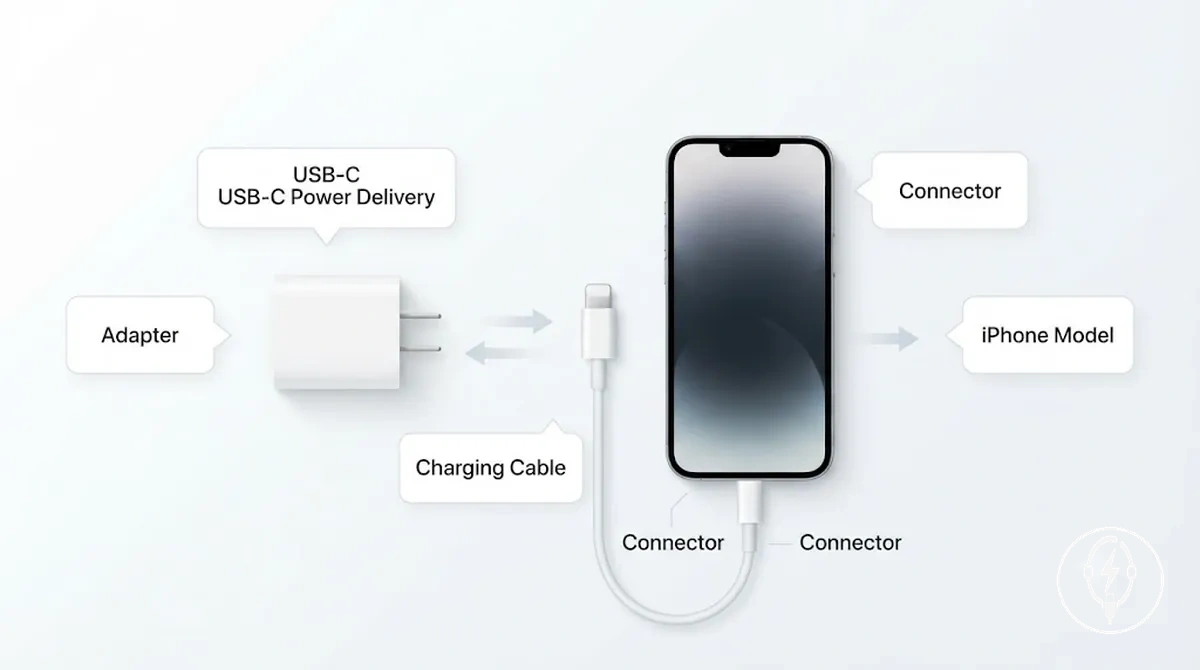
An iPhone can use fast charging only when the adapter, USB-C Power Delivery (USB-C PD) support, charging cable, connector, and iPhone model are compatible with one another. According to Apple, supported iPhone models require a USB-C power adapter rated at 20 W or higher together with a compatible charging cable for fast charging, while USB Implementers Forum (USB-IF) specifies that USB Power Delivery is the protocol that negotiates charging power between compatible devices. A complete fast-charging setup therefore requires alignment across the adapter, cable, connector, and iPhone model rather than a high-wattage adapter alone.
The annotated diagram below identifies the compatibility conditions before the checklist summarises the required setup.
Wattage, USB-C Power Delivery, and Cable Requirements are easiest to verify by checking each part of the charging setup together. The annotated diagram below identifies the compatibility conditions before the checklist summarises the required setup.
| Entity/part | Attribute/criterion | Value/condition | Effect/decision |
|---|---|---|---|
| Adapter | Wattage and protocol | USB-C power adapter rated at 20 W or higher with USB-C Power Delivery support, according to Apple | Provides the negotiated power required for supported fast charging |
| Cable | Charging support | Compatible USB-C charging cable, or USB-C to Lightning cable for supported Lightning-equipped iPhone models | Transfers negotiated charging power to the iPhone |
| Connector | Connector type | Must match the connector used by the iPhone model | An incompatible connector prevents the intended charging configuration |
| iPhone model | Accepted charging speed | Limited by the charging capability built into the specific iPhone model | Determines the maximum charging rate the device will accept |
The cable and iPhone model are compatibility conditions in the same charging chain as the adapter. For example, according to Apple, a 20 W USB-C Power Delivery adapter cannot provide fast charging if the connected cable or connector is incompatible or if the iPhone model does not support fast charging. For additional connector-specific guidance, see charger compatibility.
For additional connector-specific guidance, see charger compatibility .
A high-wattage adapter does not by itself increase charging speed because the accepted charging speed is limited by the complete compatible setup and the charging capability of the iPhone model. USB-IF states that USB Power Delivery negotiates power only between compatible devices, while Apple specifies that supported iPhone models determine how much charging power they accept, so an adapter rated above the device's accepted charging limit does not automatically reduce charging time.
Minimum Wattage for iPhone Fast Charging
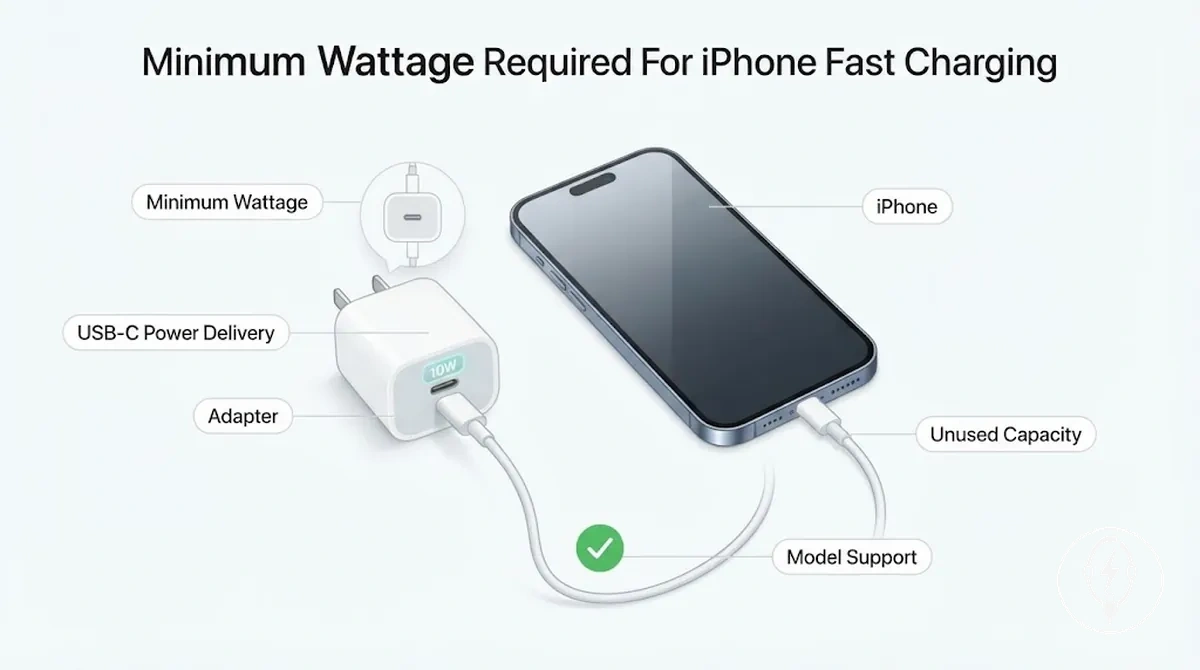
The minimum wattage for iPhone fast charging is a 20 W USB-C power adapter used with USB-C Power Delivery, a compatible charging cable, and a supported iPhone model. According to Apple, supported iPhone models achieve wired fast charging when these conditions are met, so the minimum wattage is a compatibility threshold rather than a guarantee of the highest possible charging speed. This wattage threshold distinguishes compatible fast-charging setups from lower-power charging configurations.
The annotated image below identifies the wattage condition required for a compatible fast-charging setup.
Minimum Wattage for iPhone Fast Charging is easiest to verify by checking the charger wattage, adapter capability, and model support together. The annotated image below identifies the wattage condition required for a compatible fast-charging setup.
The compact checklist below verifies whether a charging setup satisfies the minimum wattage requirement while explaining why extra power output is not always used.
- Minimum wattage: Apple specifies a USB-C power adapter rated at 20 W or higher for supported wired iPhone fast charging.
- Adapter capability: The charger must support USB-C Power Delivery so charging power can be negotiated with the iPhone.
- Model support: The connected iPhone must support fast charging because the device determines the maximum charging power it will accept.
- Unused extra capacity: A charger rated above 20 W provides additional available power, but according to Apple, the iPhone accepts only the charging power supported by its hardware, so excess adapter capacity does not automatically increase charging speed.
Higher-Wattage Adapters and iPhone Charging Limits
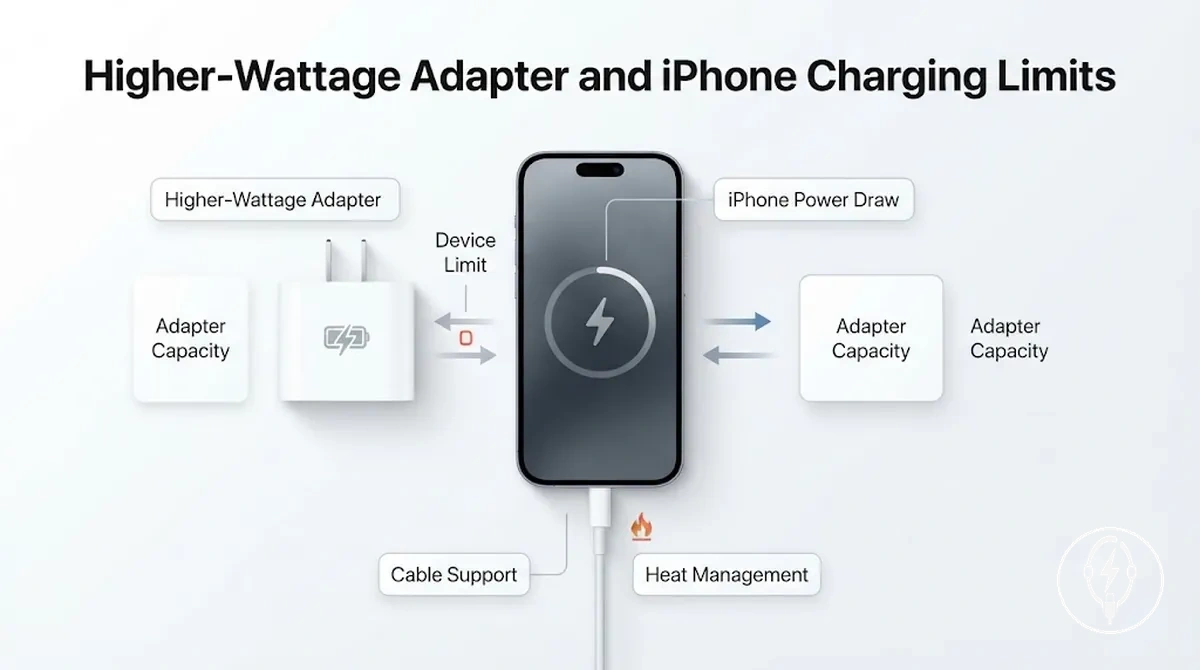
A higher-wattage adapter can be fully compatible with an iPhone, but the iPhone still controls its own power draw through its internal charging system. According to Apple, supported iPhone models negotiate charging power with a compatible USB-C Power Delivery adapter and only accept the power permitted by the device's charging design and current operating conditions. A higher charger rating therefore represents adapter capacity, while the iPhone's accepted input is limited by its device limit rather than the adapter's maximum output.
The diagram below illustrates that distinction before the comparison table.
Higher-Wattage Adapters and iPhone Charging Limits are easier to understand when charger rating and accepted device input are separated. The diagram below illustrates that distinction before the comparison table.
| Adapter capacity | iPhone accepted input |
|---|---|
| A higher-wattage USB-C Power Delivery adapter makes additional charging capacity available when cable support is compatible. | The iPhone draws only the charging power permitted by its device limit, battery state, and charging management, according to Apple. |
According to Apple, charging behaviour depends on the complete supported setup, including USB-C Power Delivery compatibility, cable support, battery condition, and heat management, so the iPhone adjusts its accepted input throughout the charging session. For example, connecting a supported iPhone to a 45 W or 65 W USB-C Power Delivery adapter does not mean the device continuously draws 45 W or 65 W because the iPhone requests only the power it is designed to accept under current conditions. In practical terms, choosing a higher-wattage adapter can provide sufficient adapter capacity for compatible devices, but any charging-speed benefit remains limited by the iPhone charging limits and device-managed power negotiation rather than the charger rating alone.
Battery Health, Heat, and Charging Safety
Fast charging and standard charging are both designed to operate safely on supported iPhone models when a compatible charger, an intact cable, and a suitable charging environment are used because the iPhone continuously manages charging through its built-in battery management system. According to Apple, iPhone software monitors battery temperature and charging behaviour to reduce charging speed when necessary to help protect the battery, so neither fast charging nor standard charging should be interpreted as automatically damaging battery health or completely preventing normal battery ageing. Battery health is influenced by charging conditions, heat, accessory quality, and everyday use rather than the charging method alone.
Battery Health, Heat, and Charging Safety become easier to understand when the main charging conditions are viewed together.
Battery Health, Heat, and Charging Safety become easier to understand when the main charging conditions are viewed together. The annotated image below highlights the heat context, battery management, compatible accessories, and normal charging environment before the safety comparison.
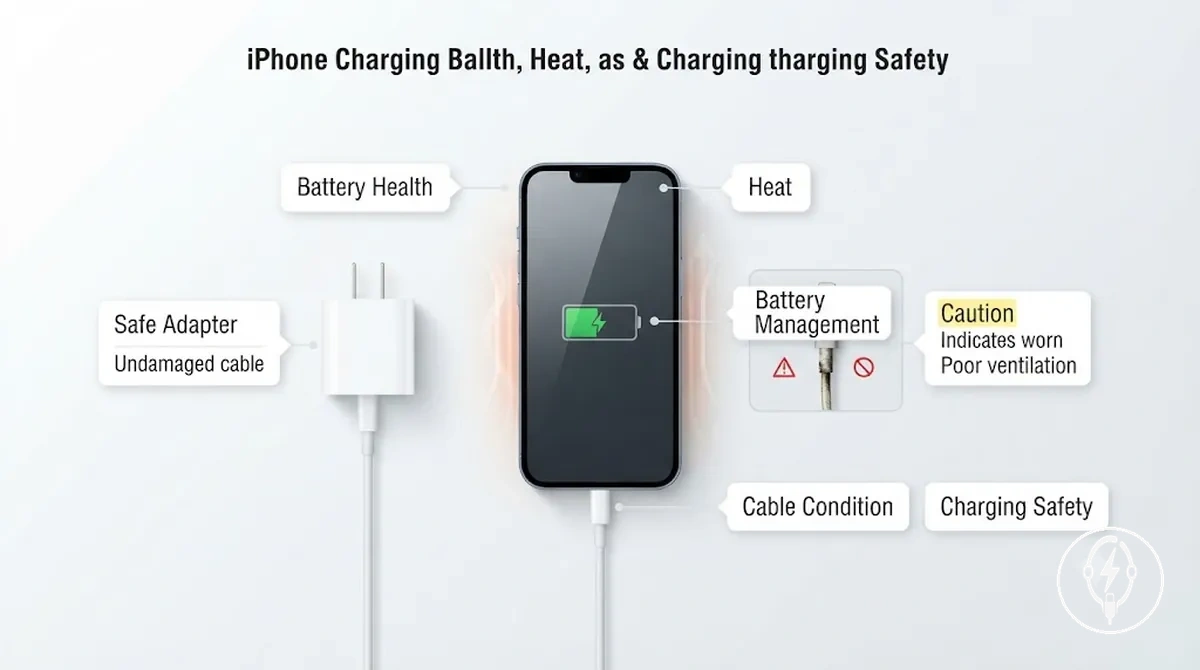
According to Apple, heat is one of the most important operating conditions affecting lithium-ion batteries because iPhone automatically adjusts charging behaviour if battery temperature increases. Apple specifies an ambient operating temperature of 0 °C to 35 °C for iPhone, and charging performance may be limited outside that range to help protect the battery. For example, charging an iPhone in a room at approximately 25 °C with a compatible charger is more likely to remain within Apple's recommended operating range than charging inside a parked vehicle exposed to much higher temperatures, reducing the likelihood of temperature-related charging slowdowns.
Battery Health, Heat, and Charging Safety also depend on accessory quality, cable condition, and the charging environment.
Battery Health, Heat, and Charging Safety also depend on accessory quality, cable condition, and the charging environment. The table below organises the main conditions that influence safe charging decisions without implying that one charging method is inherently harmful.
| Condition | Why it matters | Safer interpretation | Decision cue |
|---|---|---|---|
| Heat | Higher battery temperature causes the iPhone to adjust charging behaviour. | Normal warmth during charging is expected, but sustained excessive heat should be avoided. | Charge in a well-ventilated location. |
| Charging duration | Fast charging reduces time spent at higher charging power, while standard charging takes longer. | Charging duration alone does not determine battery health. | Select the charging method that matches your routine. |
| Adapter quality | Apple recommends compatible power adapters, and USB-IF compliant USB Power Delivery chargers support proper power negotiation. | Compatible, undamaged accessories reduce avoidable charging risks. | Avoid damaged or counterfeit chargers. |
| Cable condition | Frayed, crushed, or damaged cables can interrupt charging or create electrical hazards. | Replace cables showing visible wear before continued use. | Inspect charging cables regularly. |
| Environment | Poor ventilation and excessive ambient heat increase thermal stress. | Normal indoor temperatures support battery management more effectively than enclosed hot spaces. | Avoid charging under pillows, blankets, or inside overheated vehicles. |
According to Apple and the National Fire Protection Association, using compatible charging accessories in good condition and avoiding excessive heat supports safer charging practices, while damaged chargers, damaged cables, or abnormal heat increase avoidable charging risks. For more detailed guidance focused specifically on long-term battery care rather than charger comparison, see battery health and charging speed.
When Fast Charging Is Worth Choosing
Fast charging is worth choosing when limited charging time, a low battery level, and a compatible charger-and-cable setup create a practical need for faster charging instead of routine charging over several hours. According to Apple, supported iPhone models can charge to up to 50% battery in about 30 minutes when used with a compatible 20 W or higher USB-C power adapter under Apple's published test conditions. The practical value therefore comes from time pressure and complete charging setup readiness rather than fast charging being necessary for every user. :contentReference[oaicite:0]{index=0}
The practical value therefore comes from time pressure and complete charging setup readiness rather than fast charging being necessary for every user.
For example, if your iPhone battery is nearly empty and you have only 20 to 30 minutes before a commute, a flight, or another appointment, fast charging can restore substantially more battery capacity during that short charging window than standard charging under the same conditions. According to Apple, the published fast-charging result applies to the first part of the charging session rather than charging from 0% to 100%, making short charging windows the situation where fast charging provides the greatest practical value. If your daily routine usually allows several uninterrupted hours for charging, the additional charging speed becomes less important because available time is no longer the limiting factor.
When Fast Charging Is Worth Choosing becomes easier to decide by checking whether your routine matches these conditions.
When Fast Charging Is Worth Choosing becomes easier to decide by checking whether your routine matches these conditions.
- Short charging windows: Fast charging is worth choosing when only about 20 to 30 minutes are available before leaving.
- Commute and travel: A quick top-up is valuable when charging opportunities are limited during daily travel or longer trips.
- Shared outlets: Faster charging can reduce waiting time when multiple people need access to the same charging point.
- Adapter portability: Carrying one compact USB-C power adapter can make fast charging more practical between home, work, and travel.
- Charger and cable readiness: Fast charging requires a compatible USB-C Power Delivery adapter, a compatible charging cable, and a supported iPhone model before the published charging performance can be achieved.
For readers comparing complete charging setups rather than individual use cases, see fast charging accessories as an example of compatible equipment. If your routine regularly includes short charging windows and a compatible setup is ready, fast charging offers meaningful practical value; otherwise, standard charging remains a suitable choice for longer, uninterrupted charging sessions.
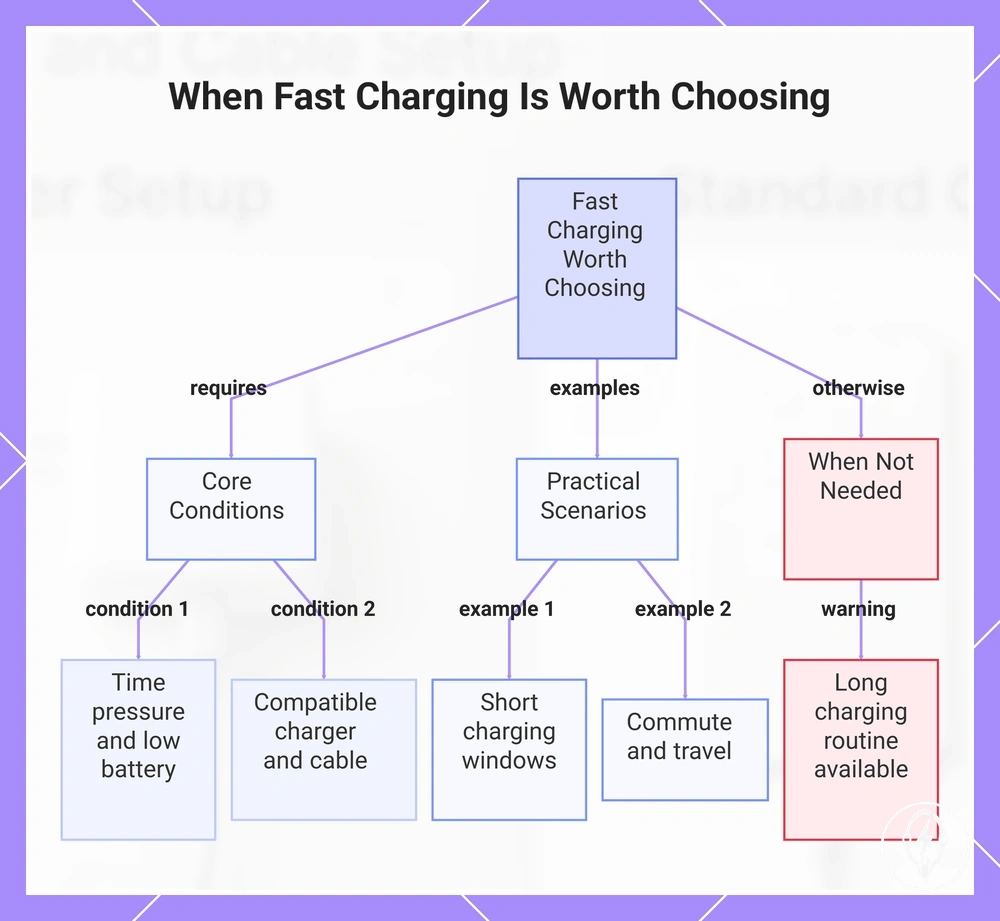
This chart outlines the core conditions, practical scenarios, and a limiting factor for deciding when fast charging is worth choosing.
This chart outlines the core conditions, practical scenarios, and a limiting factor for deciding when fast charging is worth choosing.
When Standard Charging Still Makes Sense
Standard charging still makes sense when your daily routine provides long charging periods, there is no time pressure, and your existing charger and cable already meet your iPhone's charging needs. According to Apple, supported iPhone models gain the greatest benefit from fast charging during short charging sessions, so slower charging remains sufficient when the device can stay connected for several uninterrupted hours. Standard charging is therefore enough whenever charging speed is not the main constraint. :contentReference[oaicite:0]{index=0}
Standard charging is therefore enough whenever charging speed is not the main constraint.
Overnight charging and desk charging are practical situations where standard charging satisfies everyday use because charging time is measured in hours rather than minutes. For example, leaving an iPhone connected overnight for approximately 7 to 8 hours, or connected at a desk throughout a typical workday, provides ample time for a full recharge without requiring the shortest possible charging time. According to Apple's published charging guidance, fast charging is primarily intended for situations where available charging time is limited rather than for long uninterrupted charging periods. :contentReference[oaicite:1]{index=1}
When Standard Charging Still Makes Sense, the checklist below helps verify whether your routine and accessories make slower charging a suitable choice.
When Standard Charging Still Makes Sense, the checklist below helps verify whether your routine and accessories make slower charging a suitable choice.
- Daily routine: Overnight charging or regular desk charging provides several uninterrupted hours for charging.
- Charging time available: Long charging windows mean immediate charging speed is unnecessary.
- Existing accessory fit: Your current compatible charger and cable already satisfy your normal charging routine.
- Low urgency: The iPhone does not need a rapid battery top-up before leaving home, work, or travelling.
- Spare charger: A basic spare charger kept at a desk, bedside, or secondary location remains useful for backup charging when speed is not the priority.
If these conditions describe your routine, standard charging remains an appropriate choice because sufficient charging time is already available. If your schedule regularly limits charging to brief sessions before a commute or trip, fast charging offers greater practical value because available time—not charger compatibility—becomes the deciding factor. :contentReference[oaicite:2]{index=2}
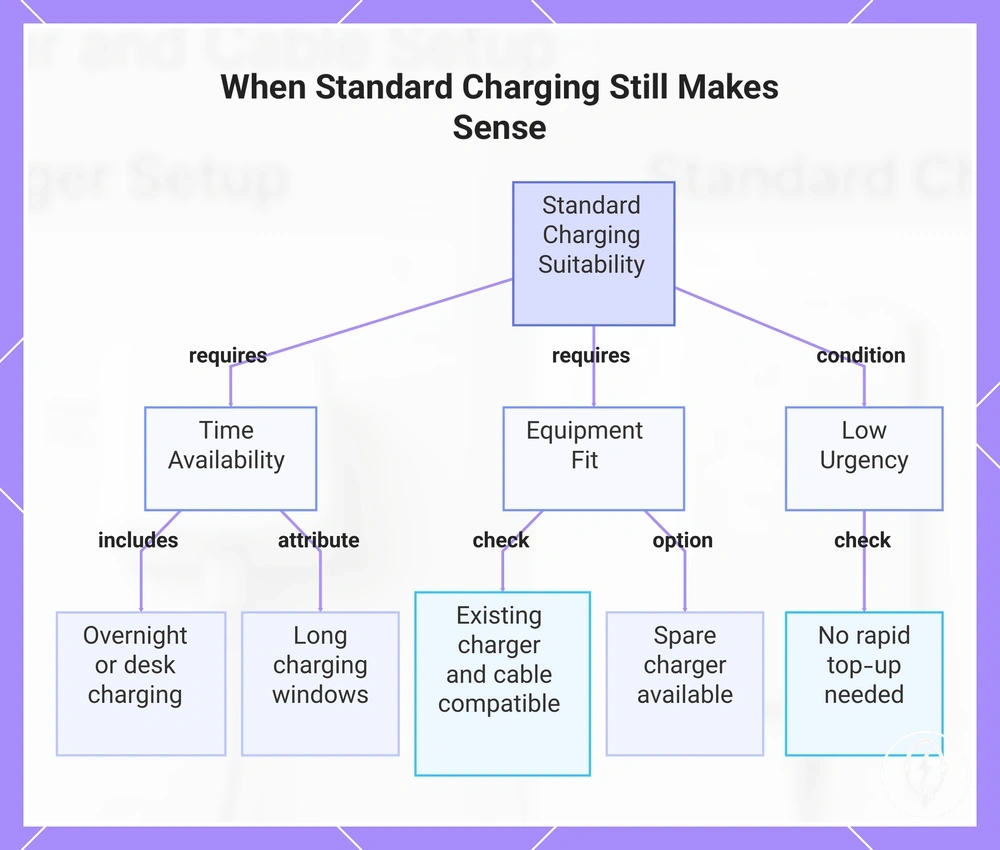
This chart shows the key conditions that make standard charging a suitable choice for iPhone users.
This chart shows the key conditions that make standard charging a suitable choice for iPhone users.
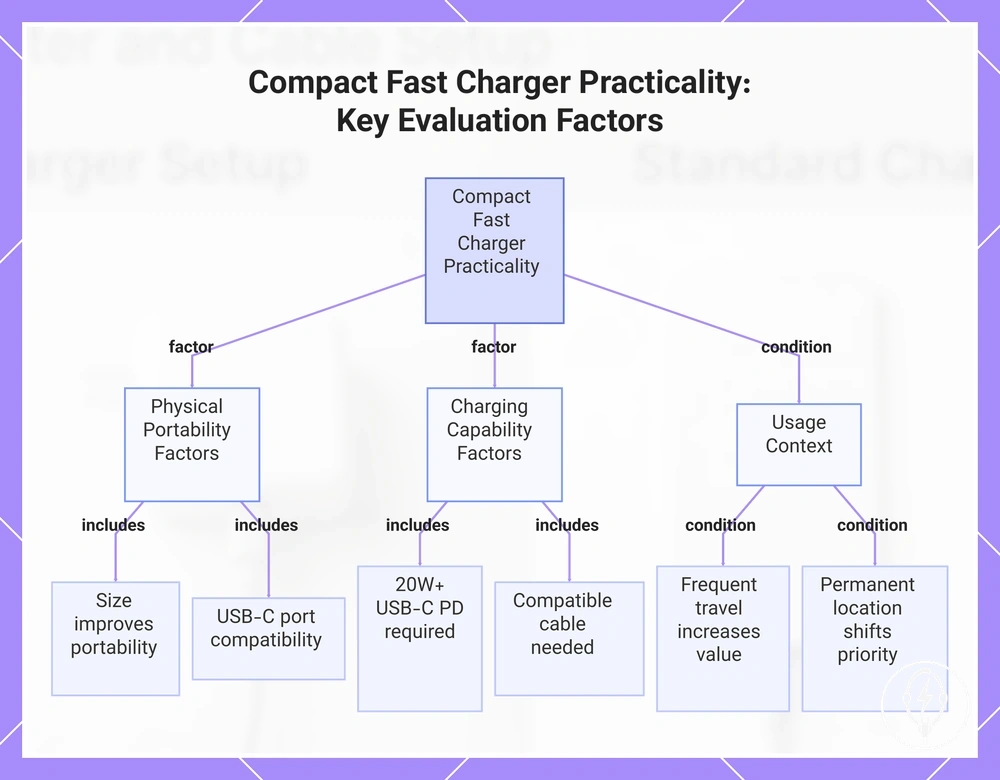
Compact Fast Chargers and Everyday Practicality
Compact fast chargers provide the greatest everyday practicality when you frequently carry a charger between locations or need a space-efficient charging setup during travel. Their practical value depends on balancing power output, port type, size, travel use, and cable pairing rather than choosing the smallest charger available. If portability is part of your daily routine, the key question is whether the reduced size still provides the charging capability your iPhone requires. :contentReference[oaicite:0]{index=0}
The charger's smaller form factor affects portability and outlet fit but does not determine charging performance by itself.
A compact charger occupies less space in a bag and is less likely to block adjacent wall outlets, improving convenience in airports, hotels, cafés, offices, and shared charging locations. The charger's smaller form factor affects portability and outlet fit but does not determine charging performance by itself. For example, two chargers of similar physical size can provide different charging capabilities if their supported power output or charging protocol differs. :contentReference[oaicite:1]{index=1}
Charging capability depends on matching the charger's power output , port type , and cable pairing with the connected iPhone.
Charging capability depends on matching the charger's power output, port type, and cable pairing with the connected iPhone. According to Apple, supported iPhone models require a compatible 20 W or higher USB-C Power Delivery power adapter for wired fast charging under Apple's specified conditions, making wattage support and USB-C compatibility more important than physical size alone. For example, a compact 20 W USB-C Power Delivery charger paired with a compatible charging cable can support fast charging on eligible iPhone models, while the same compact charger cannot provide fast charging if an incompatible cable or connector interrupts the supported charging path. :contentReference[oaicite:2]{index=2}
Before comparing individual products, evaluate compact fast chargers using these practical value criteria so portability and charging capability remain balanced rather than competing priorities.
Before comparing individual products, evaluate compact fast chargers using these practical value criteria so portability and charging capability remain balanced rather than competing priorities.
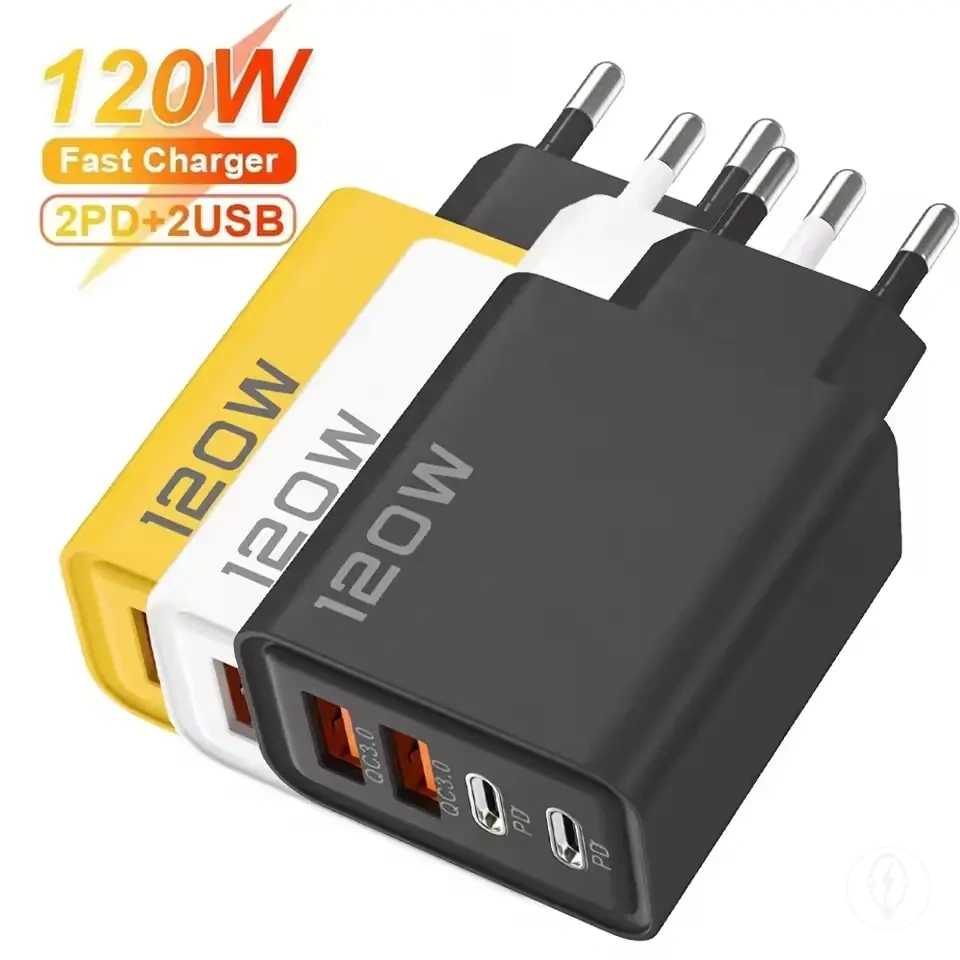
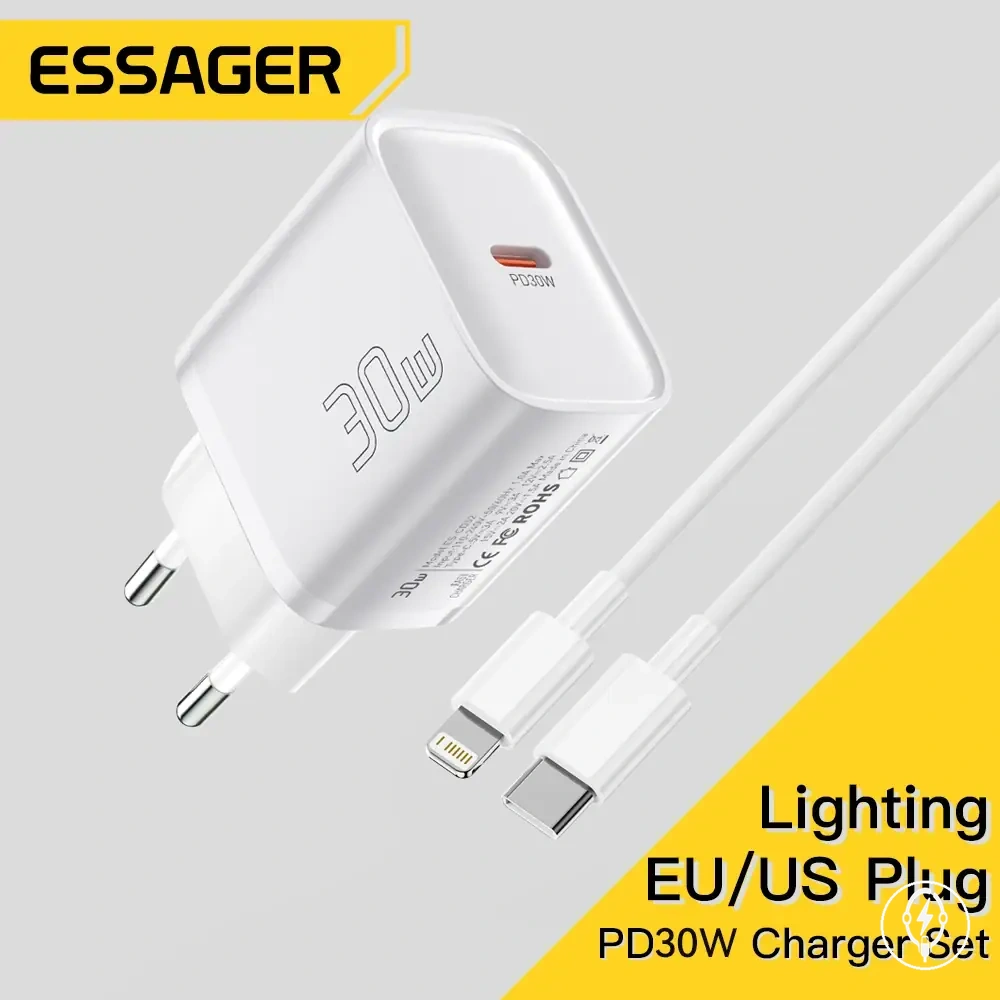
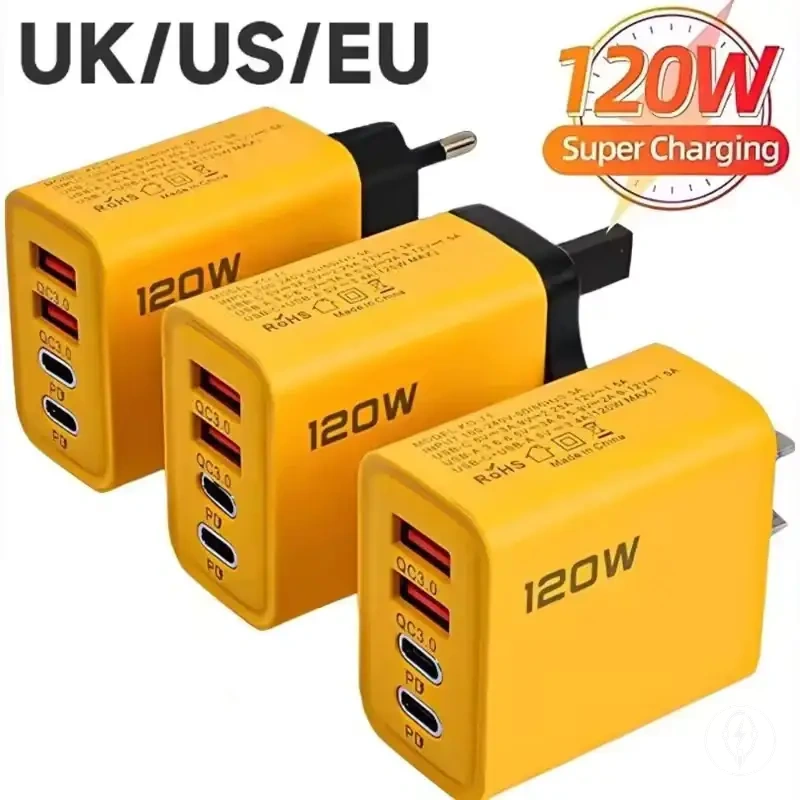
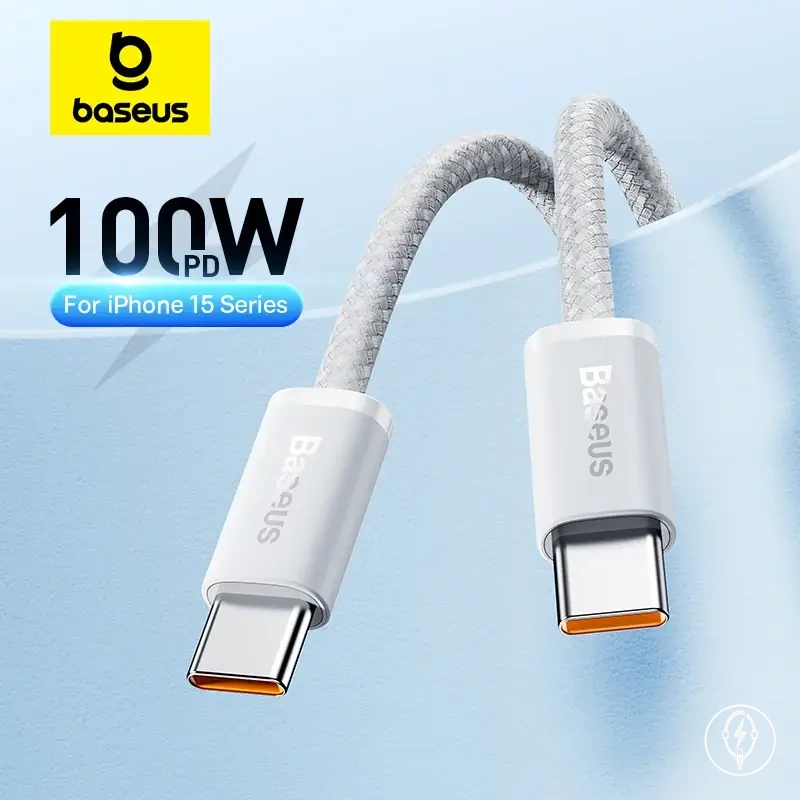
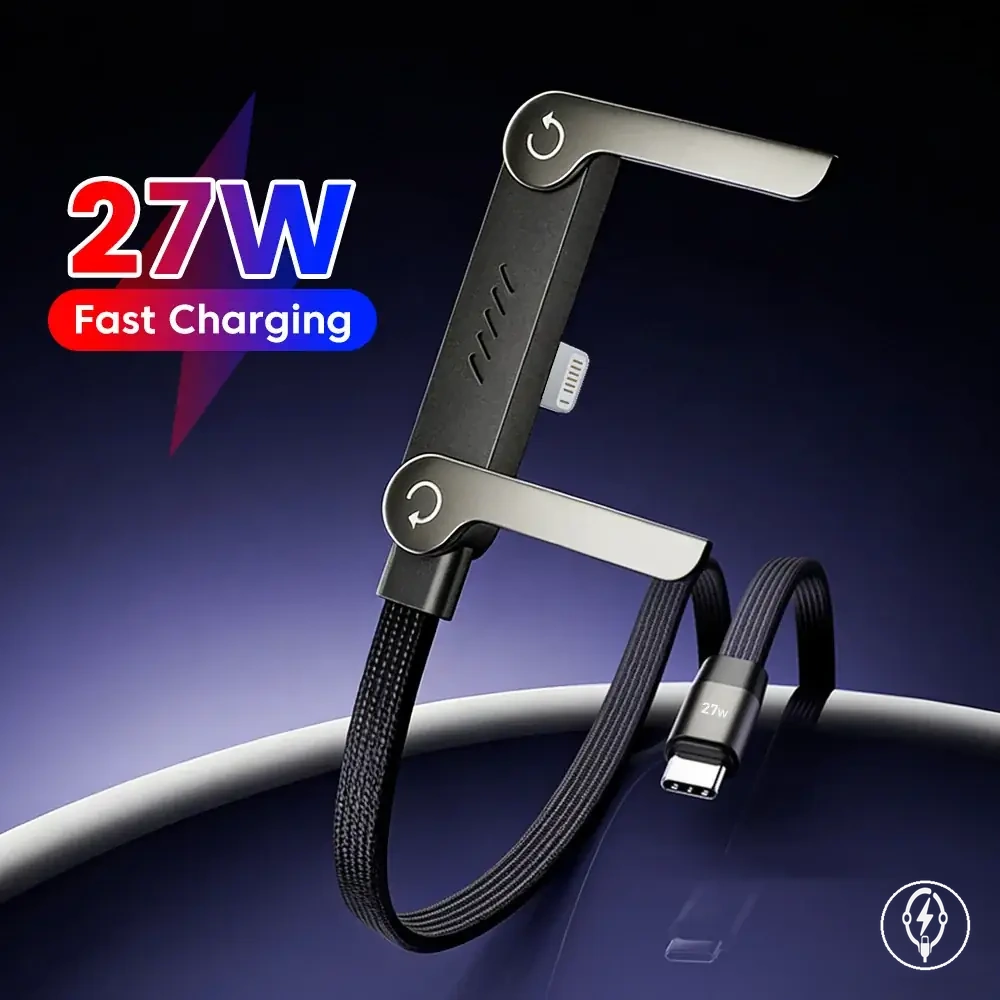
Here are product examples that may make comparison easier.
Here are product examples that may make comparison easier. Before buying, always review the compatibility criteria, essential features, and product details.
- Size: A smaller charger improves portability and outlet fit when chargers are carried daily.
- Port type: Select a USB-C port when it matches the iPhone and charging cable being used.
- Wattage support: A compatible 20 W or higher USB-C Power Delivery adapter supports wired fast charging on supported iPhone models, according to Apple.
- Cable pairing: Use a compatible charging cable so negotiated charging capability can be delivered correctly.
- Travel use: Compact chargers provide greater practical value when one charger is carried between home, work, accommodation, and transport.
If portability is a frequent requirement, a compact fast charger can offer greater everyday practicality without sacrificing compatible charging capability. If the charger remains permanently connected in one location, the trade-off shifts toward selecting appropriate power output and cable compatibility rather than prioritising physical size. :contentReference[oaicite:3]{index=3}
This chart shows the main factors that determine the everyday practicality of a compact fast charger, including physical portability, charging capability, and usage context.
Choosing Between a Fast Charger and a Standard Charger
Choosing between a fast charger and a standard charger depends on your speed need, charger compatibility, charging routine, heat context, and accessory budget rather than one option being universally better. According to Apple, supported iPhone models can charge to up to 50% battery in about 30 minutes when used with a compatible 20 W or higher USB-C Power Delivery power adapter under Apple's published test conditions, making a fast charger the better fit when charging time is limited. The decision framework below organises these criteria into practical charging directions. :contentReference[oaicite:0]{index=0}
The decision framework below organises these criteria into practical charging directions.
Speed need and charging routine are the first decision criteria because they determine whether faster charging provides meaningful value. For example, according to Apple, a supported iPhone can reach up to 50% battery in about 30 minutes under compatible fast-charging conditions, making a fast charger suitable for short charging windows before commuting or travelling. If charging normally occurs overnight for approximately 7 to 8 hours or throughout a workday, a standard charger remains a practical choice because available charging time already exceeds the time required to recharge the device. :contentReference[oaicite:1]{index=1}
Charger compatibility and heat context should be evaluated before selecting either charging direction.
Charger compatibility and heat context should be evaluated before selecting either charging direction. Apple specifies that wired fast charging requires a compatible 20 W or higher USB-C Power Delivery adapter, a compatible charging cable, and a supported iPhone model, while iPhone battery management adjusts charging behaviour according to battery temperature and operating conditions. A compatible charging setup therefore contributes more to charging performance than choosing a higher-powered adapter alone. :contentReference[oaicite:2]{index=2}
Use the charger selection criteria when comparing charging accessories beyond charging speed alone.
Use the charger selection criteria when comparing charging accessories beyond charging speed alone. Accessory budget should be considered only after compatibility, charging routine, and speed need because paying for additional charging capability offers practical value only when your routine regularly benefits from faster charging.
The table below summarises the main criteria for choosing between a fast charger and a standard charger.
The table below summarises the main criteria for choosing between a fast charger and a standard charger.
Before buying, always review the compatibility criteria, essential features, and product details.
Here are product examples that may make comparison easier. Before buying, always review the compatibility criteria, essential features, and product details.
| User condition | Better fit | Reason | Qualification |
|---|---|---|---|
| Short charging window of about 20–30 minutes | Fast charger | Provides a larger battery increase during limited charging time. | Requires a supported iPhone, a compatible 20 W or higher USB-C Power Delivery adapter, and a compatible charging cable. |
| Overnight charging routine | Standard charger | Several uninterrupted hours reduce the practical advantage of faster charging. | Suitable when charging speed is not time-critical. |
| Compatible adapter, cable, and iPhone model already available | Fast charger | Existing compatibility enables supported fast charging. | Charging speed remains limited by the iPhone's accepted charging capability. |
| Warm charging environment | Either option | iPhone battery management adjusts charging behaviour according to temperature. | Use compatible accessories and charge in a well-ventilated location. |
| Limited accessory budget | Standard charger | Lower charging speed is often sufficient when long charging periods are already available. | Choose a fast charger only if shorter charging sessions are part of your routine. |
The final criteria split is straightforward: choose a fast charger when your speed need, compatible charging setup, and daily routine benefit from shorter charging sessions; choose a standard charger when long charging windows already satisfy your routine and faster charging offers little additional practical value. This criteria-based approach avoids treating either charger type as the right choice for every user. :contentReference[oaicite:3]{index=3}