iPhone Charging Accessories for Setups, Compatibility, and Buying Decisions
iPhone charging accessories are hardware designed to deliver power to an iPhone or support its charging environment, including a cable, adapter, wireless charger, charging station, and portable charger. According to Apple, compatible charging methods include wired USB charging and wireless charging on supported iPhone models using Qi or MagSafe-compatible technology. Choosing the right iPhone charging accessories starts with matching the iPhone model, connector type, charging method, power source, and intended charging setup.
People charge iPhones in different environments, including a desk, bedside table, vehicle, airport, hotel, or while travelling.
People charge iPhones in different environments, including a desk, bedside table, vehicle, airport, hotel, or while travelling. A charging setup that works well at home may not suit mobile use because connector type, available power source, portability, and the number of devices being charged all influence compatibility and convenience. For example, an iPhone with a USB-C connector requires different cable compatibility than an older Lightning-equipped model, while wireless charging also requires a compatible iPhone and correctly aligned charging surface, as specified by Apple.
This page provides a decision-support framework rather than product recommendations.
This page provides a decision-support framework rather than product recommendations. It helps compare iPhone charging accessories by checking compatibility, charging method, connector type, cable, adapter, wireless charger, charging station, portable charger, safety considerations, and intended use case before evaluating individual products. According to Apple Support, current iPhone models support both wired charging and wireless charging where applicable, but the available charging methods depend on the specific iPhone model and supported charging standard instead of a universal accessory.
Product examples are intentionally introduced only in later sections after the selection criteria have been established.
Product examples are intentionally introduced only in later sections after the selection criteria have been established. This keeps the opening focused on understanding accessory families and making informed buying decisions instead of presenting a catalog or product ranking.
Table of Contents
What Counts as an iPhone Charging Accessory
An iPhone charging accessory is an item that supports powering, connecting, positioning, or extending iPhone charging. According to Apple, compatible charging accessories include charging cables, USB power adapters, MagSafe chargers, Qi-certified wireless chargers, charging stands used with compatible chargers, charging stations, and external battery packs that supply power to an iPhone. The scope is limited to accessories whose primary function is charging support rather than unrelated phone functions.
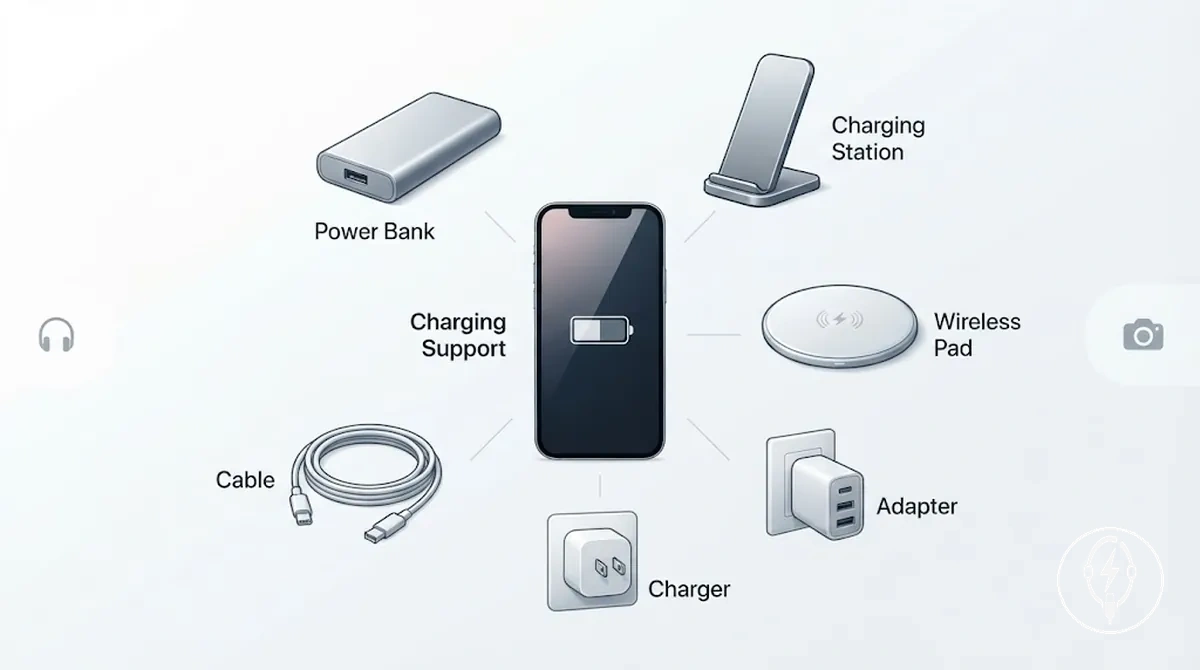
Charging accessories provide either direct or indirect charging support. Direct accessories transfer electrical power to the iPhone, while indirect accessories improve charging by positioning, aligning, or organising compatible charging hardware. For a broader explanation of what iPhone charging accessories include, it is useful to distinguish charging-related accessories from unrelated phone accessories such as camera accessories or audio accessories. A stand or charging station belongs within this scope only when it is designed to support or organise the charging process rather than simply holding the device.
Charging accessories provide either direct or indirect charging support.
The main charging accessory types include the following charging roles:
- Charger: Supplies electrical power from a wall outlet, vehicle, or other compatible power source to charge an iPhone.
- Cable: Connects the iPhone to a compatible charger, computer, or power bank for wired charging and, where supported, data transfer.
- Adapter: Converts or delivers compatible electrical output from a power source or provides connector compatibility for supported charging configurations.
- Wireless pad: Transfers power wirelessly to compatible iPhone models using the Qi wireless charging standard or MagSafe-compatible alignment.
- Stand or charging station: Positions one or more devices for convenient charging and may integrate wired or wireless charging hardware.
- Power bank: Stores portable battery capacity and supplies backup charging when mains electricity is unavailable.
Chargers, Cables, Wireless Pads, Stations, and Power Banks
Chargers, cables, wireless pads, charging stations, and power banks are iPhone charging accessories grouped by their charging function and operating condition. According to Apple, wired charging requires a compatible power adapter or other USB power source together with a compatible charging cable, while wireless charging requires a compatible Qi or MagSafe charging surface connected to external power. The examples below group each accessory by its charging function rather than by product model or brand.
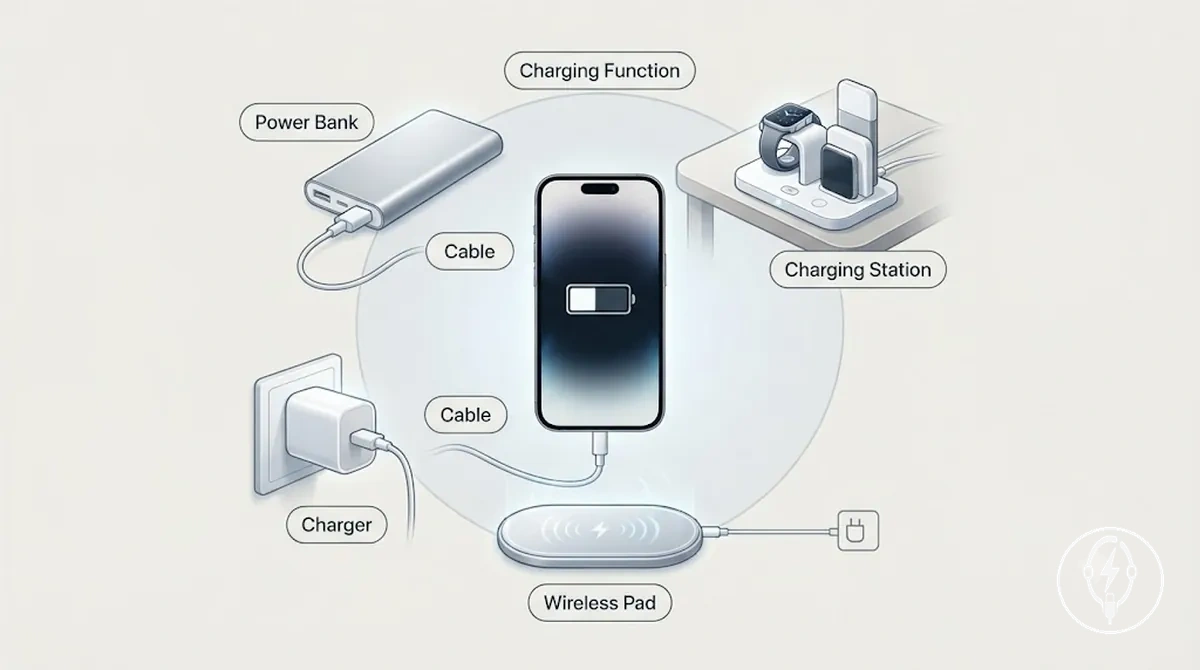
Some accessories work independently, while others operate only as part of a charging setup. For example, a wall charger connected to a charging cable and a mains outlet provides a complete wired charging path, whereas a wireless pad still requires its own power connection before it can transfer energy to a compatible iPhone, as described by Apple.
Some accessories work independently, while others operate only as part of a charging setup.
The following examples group accessories by charging function:
- Charger: Role: Supplies electrical power from a wall outlet, vehicle, or other compatible power source. Condition: Requires a compatible charging cable or an integrated charging connector to deliver power to the iPhone.
- Cable: Role: Transfers power between the charger and the iPhone and, where supported, also transfers data. Condition: The cable connector must match both the iPhone and the connected power source.
- Wireless pad: Role: Transfers power wirelessly to a compatible iPhone using Qi or MagSafe-compatible charging. Condition: The charging pad must remain connected to an external power source and the iPhone must be correctly aligned on the charging surface.
- Charging station: Role: Charges and organises one or more compatible devices from a fixed location. Condition: Requires an external power connection and supports only the charging methods built into the station.
- Power bank: Role: Supplies portable backup power from its internal rechargeable battery. Condition: Must contain stored battery capacity and connect through a compatible charging cable or supported wireless charging feature.
Main Types of iPhone Charging Accessories
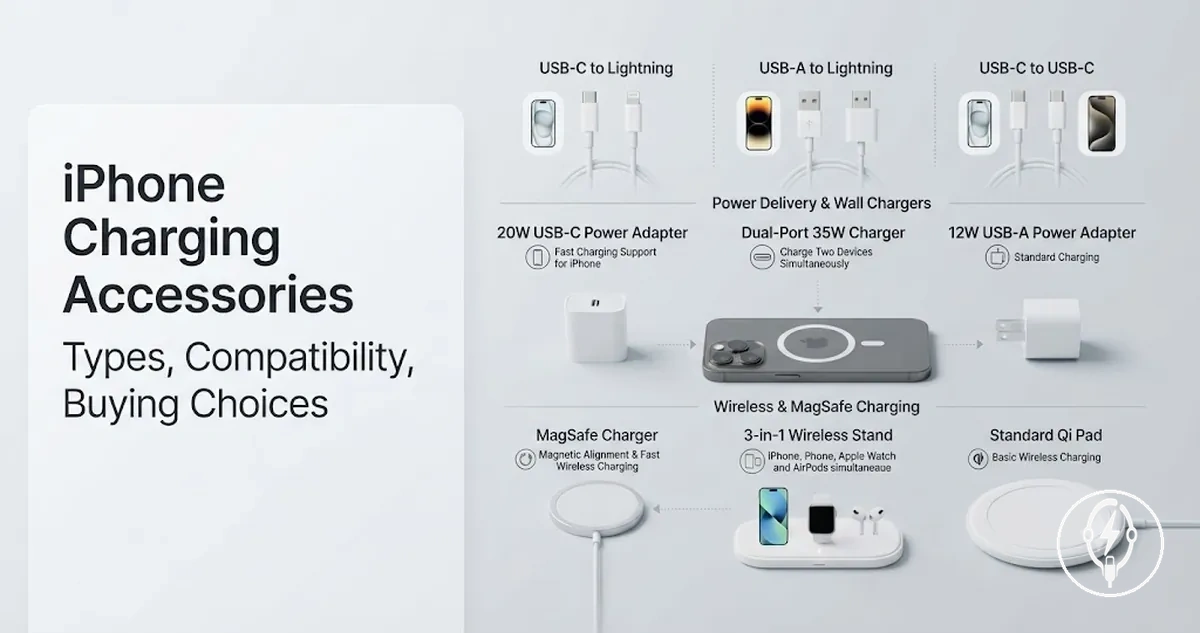
iPhone charging accessories are classified by their charging method, connection method, and use case. According to Apple, the primary accessory types include wired chargers, charging cables, USB power adapters, wireless chargers, MagSafe magnetic chargers, charging stations, portable chargers, and travel chargers. Understanding these category-level differences helps identify the appropriate accessory before comparing compatibility, charging performance, or buying criteria.
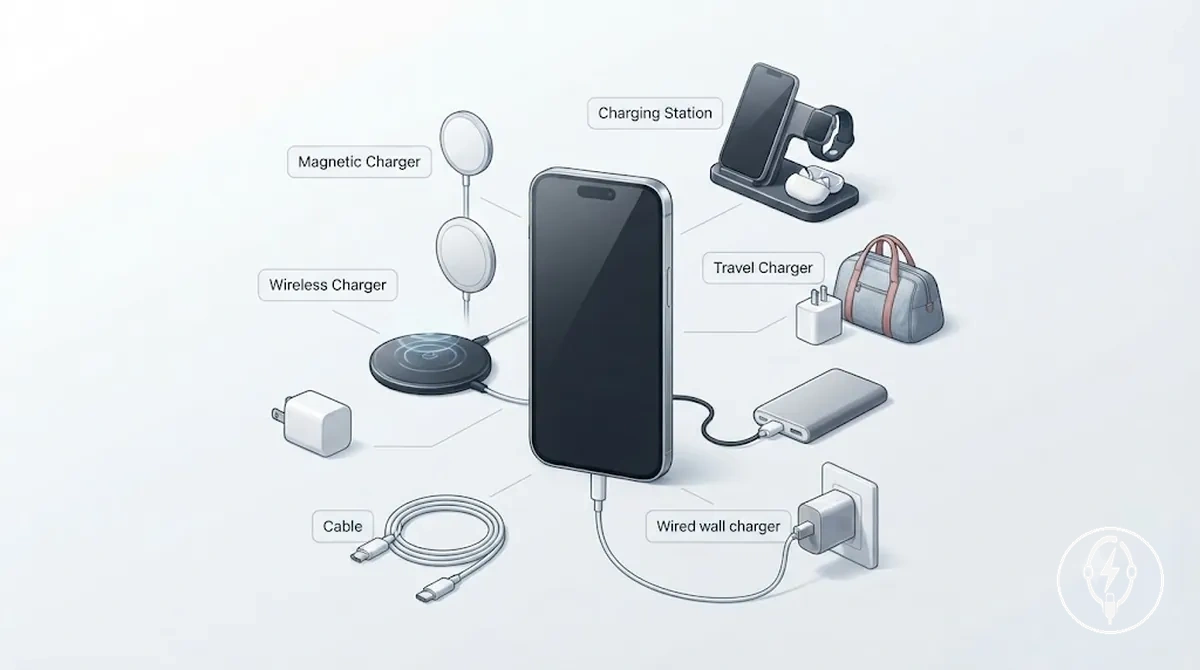
Each accessory family performs a different charging role. A wired charger supplies power through a compatible cable, a cable carries power and data between compatible devices, an adapter converts mains electricity into USB power output, a wireless charger transfers power through Qi-compatible charging, and a MagSafe charger adds magnetic alignment for supported iPhone models, as specified by Apple. Charging stations are designed for charging multiple compatible devices from one location, while portable and travel chargers prioritise mobility and backup power rather than permanent installation. Selecting the accessory category first reduces compatibility mistakes before comparing connector type, charging standard, or power output.
Each accessory family performs a different charging role.
For example, a home office may benefit from a charging station that powers an iPhone, Apple Watch, and AirPods together, whereas a traveller is more likely to combine a compact travel charger with a portable charger for charging away from mains electricity. Readers looking for a more detailed breakdown can continue to the dedicated guide covering types of iPhone charging accessories.
| Accessory Type | Charging Method | Primary Role | Typical Use Case |
|---|---|---|---|
| Wired charger | USB cable | Supplies power from a wall outlet or USB power source | Home, office, or bedside charging |
| Cable | Physical connector | Transfers power and, where supported, data | Connecting an iPhone to a charger, computer, or power bank |
| Adapter | Power conversion | Provides compatible USB power output | Wall charging and USB power delivery |
| Wireless charger | Qi wireless charging | Charges without inserting a cable into the iPhone | Desk and bedside charging |
| Magnetic charger | MagSafe magnetic alignment | Aligns supported iPhone models during wireless charging | MagSafe-compatible charging setups |
| Charging station | Wired and/or wireless | Charges multiple compatible devices from one location | Shared household and office setups |
| Portable charger | Internal rechargeable battery | Provides backup charging away from fixed power sources | Travel, commuting, and emergency charging |
| Travel charger | Compact wired charging | Provides portable wall charging during travel | Hotels, airports, vehicles, and business trips |
Cable and Adapter Charging Accessories
Cable and adapter charging accessories are the core components of wired iPhone charging because the cable transfers power to the iPhone while the adapter converts AC mains electricity into USB power output. According to Apple, connector compatibility depends on the iPhone model, with current models using USB-C and earlier generations using Lightning. Effective wired charging therefore requires both the correct connector type and a compatible adapter port to complete the charging path.
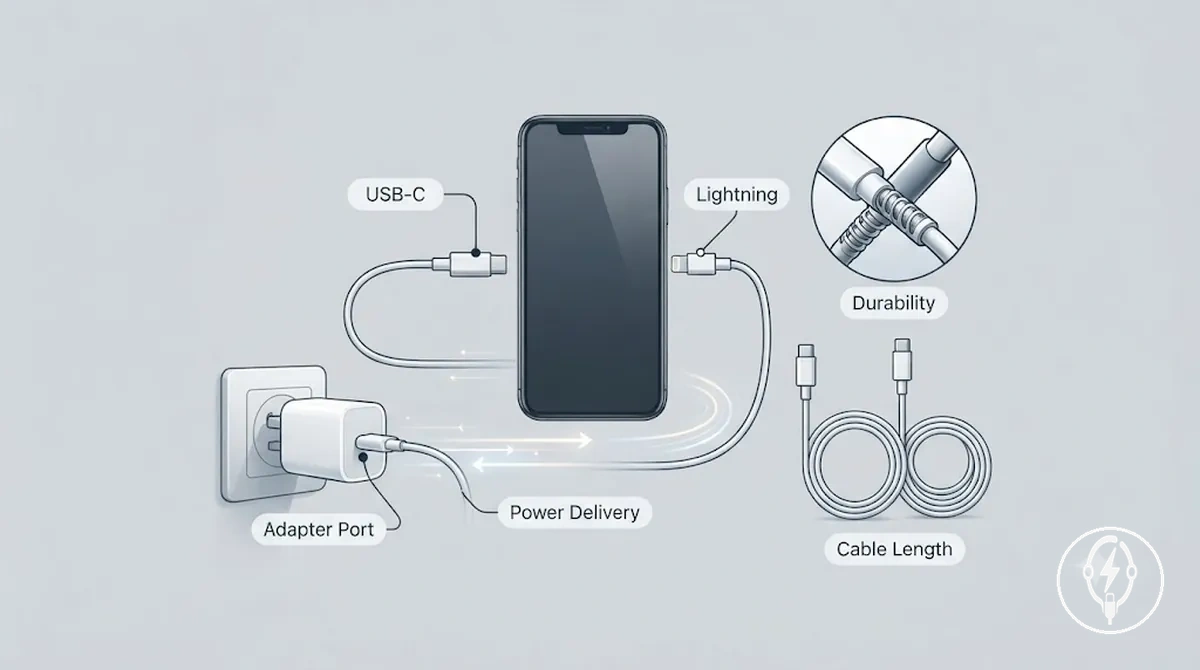
A cable should be evaluated by its connector type, cable length, and durability, while an adapter should be evaluated by its adapter port and USB Power Delivery support. Apple specifies that USB Power Delivery is available through compatible USB-C power adapters and USB-C charging cables, while Lightning-equipped iPhones require a Lightning cable at the phone end. Connector fit determines whether the cable physically connects to the iPhone, whereas adapter output determines whether compatible power can be supplied, so both accessories should be assessed together. For a more detailed explanation, see iPhone charging cables and connectors.
For a more detailed explanation, see iPhone charging cables and connectors .
Before selecting a wired charging setup, check the following:
- Match the connector type to the iPhone model by choosing either a USB-C or Lightning cable.
- Confirm the adapter port matches the cable connection, such as a USB-C port for a USB-C charging cable.
- Select an appropriate cable length for the charging location to minimise unnecessary cable strain during daily use.
- Verify that both the cable and adapter support USB Power Delivery when compatible faster wired charging is required.
- Choose a cable with reinforced durability, including strain relief around the connector, if it will be connected and disconnected frequently.
Wireless, Magnetic, and Station-Based Accessories
Wireless, magnetic, and station-based charging accessories are designed for fixed or low-cable charging locations such as desks, bedside tables, and workstations. According to Apple, compatible iPhone models support Qi wireless charging, while MagSafe-compatible models also support magnetic alignment with MagSafe chargers. In these charging setups, alignment, placement, and device support determine whether charging begins and continues consistently, rather than the accessory type alone.
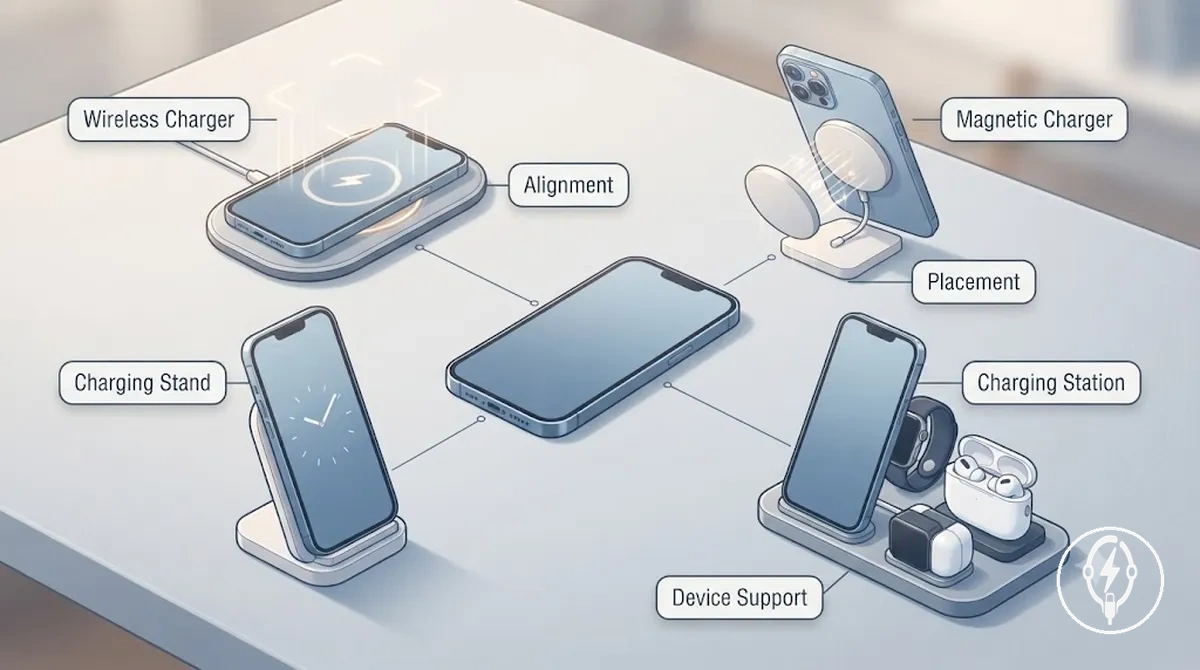
A wireless charger or charging pad transfers power when a compatible iPhone is positioned correctly on the charging surface. A magnetic charger improves positioning by aligning supported iPhone models with built-in magnets, while a charging stand raises the phone for easier viewing on a desk or bedside table. A charging station combines multiple charging locations for supported devices such as an iPhone, Apple Watch, and AirPods. According to Apple, magnetic alignment is available only on supported MagSafe-compatible iPhone models, so charging convenience remains dependent on correct placement and device support rather than universal compatibility.
A charging station combines multiple charging locations for supported devices such as an iPhone, Apple Watch, and AirPods.
The following comparison highlights the practical differences between these setup-oriented accessories:
- Wireless charger or charging pad: Convenience: Reduces cable handling on fixed surfaces. Charging condition: Requires accurate alignment on the charging surface. Practical outcome: Correct placement helps maintain uninterrupted charging.
- Magnetic charger: Convenience: Magnetic attachment helps position supported iPhone models. Charging condition: Requires a MagSafe-compatible iPhone or compatible magnetic case. Practical outcome: Better positioning reduces accidental misalignment during charging.
- Charging stand: Convenience: Keeps the display visible at a comfortable viewing angle on a desk or bedside table. Charging condition: The stand must support the selected wired or wireless charging method. Practical outcome: Charging and screen viewing can occur simultaneously.
- Charging station: Convenience: Organises multiple supported devices in one fixed location. Charging condition: Each charging position supports only the charging method built into that station. Practical outcome: A single charging area reduces cable clutter while maintaining organised device placement.
Portable and Travel Charging Accessories
Portable and travel charging accessories are mobility-focused iPhone charging accessories intended for charging away from a permanent desk or bedside setup. A portable charger or power bank supplies stored battery power when no wall outlet is available, while a travel charger, compact adapter, or foldable charger reduces the space required for wired charging. The appropriate charging setup is determined by outlet access, bag space, and the need for backup power during commuting, overnight travel, or multi-device trips. :contentReference[oaicite:0]{index=0}
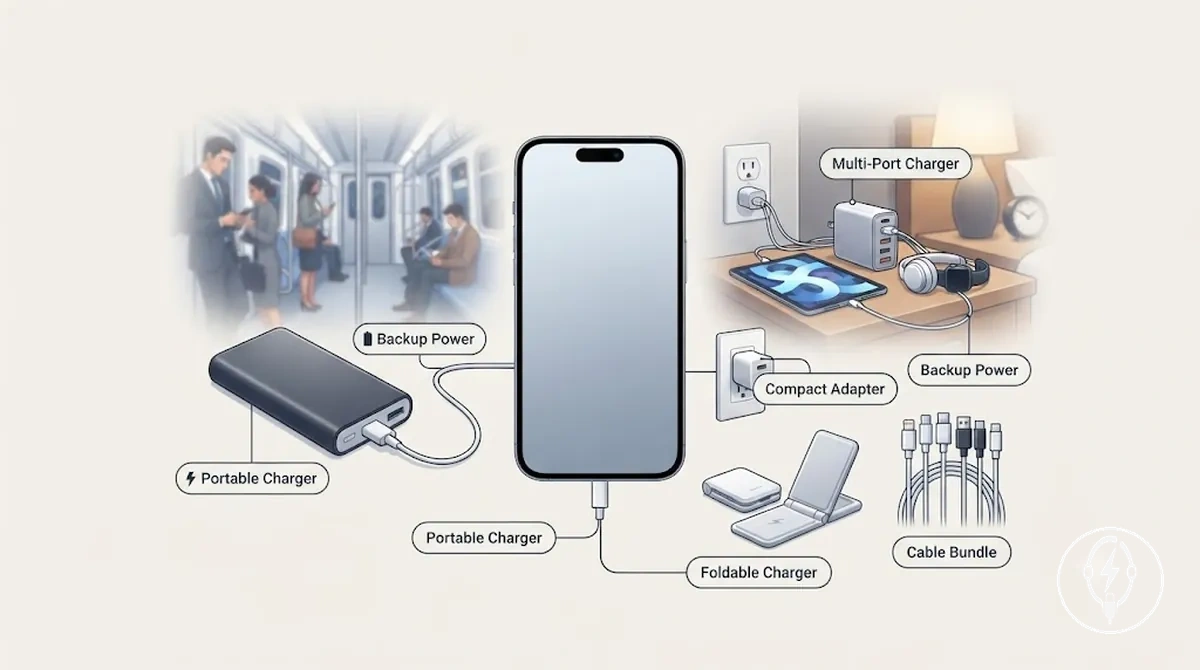
A compact adapter is suitable when a wall outlet is available but storage space is limited, while a foldable charger improves portability by reducing the size of the charger when stored. A power bank provides backup power during a commute when outlet access is unavailable, a cable bundle keeps compatible charging cables organised and reduces connector mix-ups, and a multi-port charger allows multiple compatible devices to charge from a single wall outlet during overnight travel. The most suitable accessory combination depends on charging location, connector compatibility, available outlet access, and whether portable backup power is required. :contentReference[oaicite:1]{index=1}
The most suitable accessory combination depends on charging location, connector compatibility, available outlet access, and whether portable backup power is required.
Before selecting a travel charging setup, confirm the following:
- Choose a portable charger or power bank when charging must continue without access to a wall outlet during commuting.
- Select a compact adapter or foldable charger when portability and limited bag space are higher priorities than a permanent charging setup.
- Check that the cable bundle contains connectors compatible with your iPhone and charging accessories.
- Use a multi-port charger when charging multiple compatible devices from a single outlet during overnight travel.
- Match the travel charging accessory to the charging environment instead of carrying accessories that do not support the intended use case.
Compatibility Factors for iPhone Charging Accessories
Compatibility for iPhone charging accessories depends on five matching factors: the iPhone model, connector, adapter output, charging standard, and accessory design. According to Apple, iPhone compatibility is determined by whether the device supports USB-C or Lightning for wired charging and whether it supports Qi or MagSafe wireless charging where applicable. A charging accessory that physically fits an iPhone is not necessarily capable of providing the highest supported charging performance or the same conditions for safe operation. :contentReference[oaicite:0]{index=0}
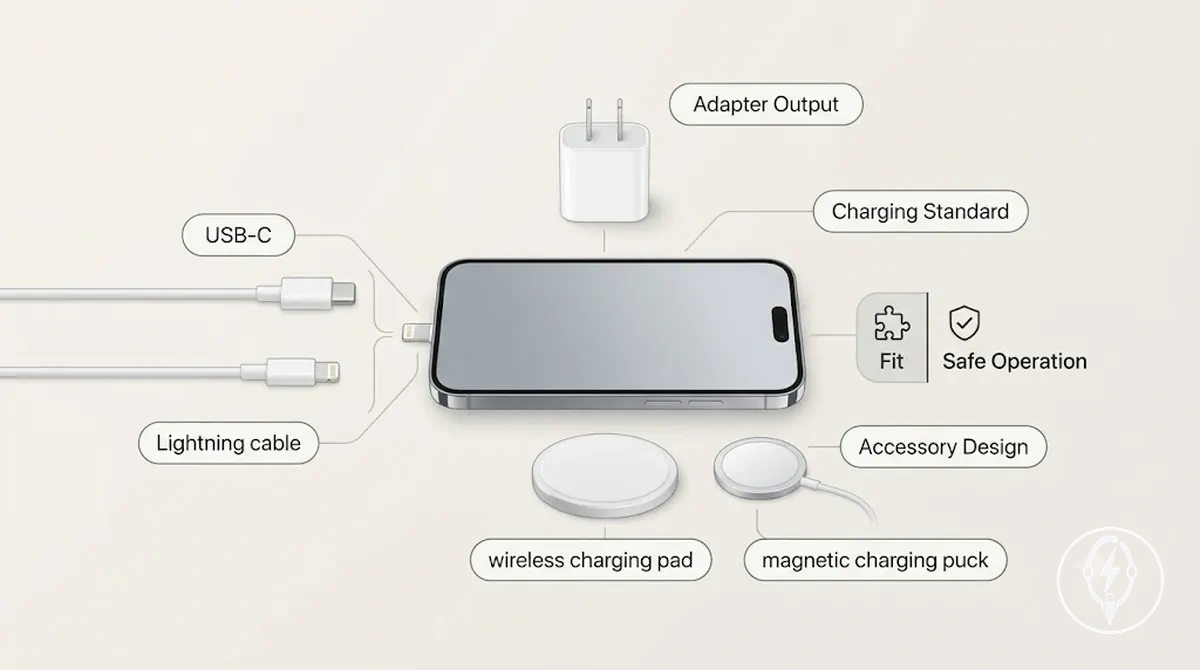
The first compatibility check is whether the charging path matches the iPhone model. Current iPhone models use USB-C, while earlier generations use Lightning for wired charging, and wireless charging requires support for the appropriate Qi or MagSafe charging standard. Apple also specifies that fast charging requires a compatible USB-C cable together with a USB-C power adapter that supports USB Power Delivery, so connector fit, adapter output, and charging standard should be evaluated together rather than separately. For example, an iPhone may accept a compatible cable yet not support the highest available charging capability if the adapter output or charging standard does not meet the device's supported requirements. For a detailed model reference, see iPhone charger compatibility. :contentReference[oaicite:1]{index=1}
For a detailed model reference, see iPhone charger compatibility .
Compatibility should always be confirmed against the specific iPhone model because future devices, newly released accessories, or manufacturer-specific designs can introduce different connectors, charging standards, or supported features. If an accessory manufacturer does not explicitly list your iPhone model, supported connector, or wireless charging standard, compatibility should be treated as unverified until those specifications are confirmed. :contentReference[oaicite:2]{index=2}
If an accessory manufacturer does not explicitly list your iPhone model, supported connector, or wireless charging standard, compatibility should be treated as unverified until those specifications are confirmed.
Before purchasing an iPhone charging accessory, confirm the following compatibility checks:
- Verify that the iPhone model matches the required USB-C or Lightning connector.
- Check that the adapter output supports the intended charging method, including USB Power Delivery where compatible faster charging is supported.
- Confirm that the charging standard matches the accessory, such as Qi wireless charging or MagSafe-compatible magnetic charging.
- Review the accessory design for cable routing, magnetic alignment, connector fit, and case compatibility where applicable.
- Separate fit from speed support; an accessory can connect correctly without supporting the highest charging capability available for that iPhone model.
- Confirm that all components in the charging setup support safe operation according to the manufacturer's stated compatibility for the specific iPhone model.
USB-C, Lightning, Adapter Output, and Model Fit
USB-C, Lightning, adapter output, and model fit determine different parts of iPhone charging compatibility. The connector type determines the compatible cable path, the adapter output determines whether compatible charging power can be delivered, and model fit determines whether the iPhone supports that connector and charging method. Apple specifies that connector compatibility alone does not confirm maximum charging performance because the cable, power adapter, charging protocol, and iPhone model must all support the same charging configuration. :contentReference[oaicite:0]{index=0}
USB-C, Lightning, adapter output , and model fit determine different parts of iPhone charging compatibility.
USB-C iPhone models require a USB-C cable for wired charging, while earlier iPhone models use a Lightning connector. Adapter output should match the cable path and support the required charging protocol, such as USB Power Delivery when supported by the iPhone model. For example, a USB-C cable connected to a compatible USB-C adapter can still charge an iPhone if the adapter provides only 5 W output, but it will not deliver faster USB Power Delivery charging that compatible iPhone models support with higher-output USB-C power adapters. Connector fit, adapter support, and model fit should therefore be verified separately before drawing conclusions about charging performance. :contentReference[oaicite:1]{index=1}
| Compatibility Variable | Compatible Cable Path | Adapter Requirement | Decision Effect |
|---|---|---|---|
| USB-C | USB-C cable | USB-C adapter with compatible output | Confirms connector compatibility but not maximum charging performance |
| Lightning | Lightning cable | Compatible USB adapter matched to the cable | Supports earlier iPhone models after model fit is confirmed |
| Adapter Output | Uses the connected cable path | Output and charging protocol must match the intended charging method | Determines available charging capability after connector compatibility is confirmed |
| Model Fit | Depends on the iPhone connector type | Must support the selected cable and adapter combination | Should be verified separately from connector fit and charging performance |
Fast Charging and Wireless Charging Requirements
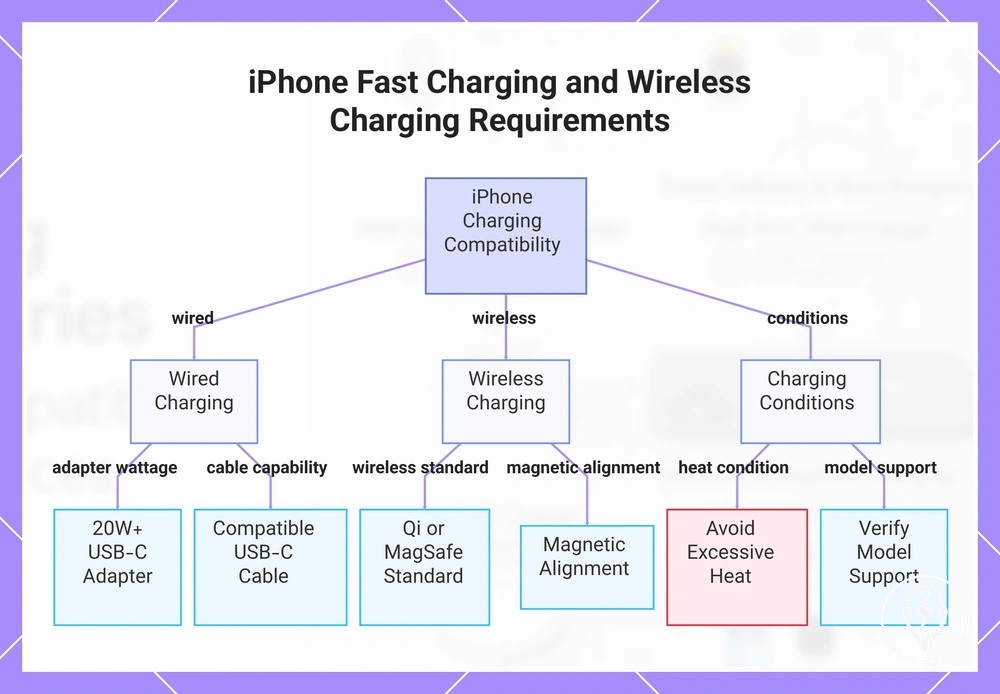
Fast charging and wireless charging require compatibility between the iPhone model, adapter wattage, cable capability, wireless standard, and the charging conditions. According to Apple, compatible iPhone models support faster wired charging with a 20 W or higher USB-C power adapter together with a compatible USB-C charging cable, while wireless charging requires a compatible Qi or MagSafe charger and a supported iPhone model. An iPhone can charge successfully with a compatible accessory without necessarily reaching its highest supported charging speed because charging compatibility and maximum charging performance are separate compatibility checks. :contentReference[oaicite:0]{index=0}
Verify model support, accessory support, and charging conditions together before comparing charging speed.
Adapter wattage determines the maximum power available to the iPhone, while cable capability determines whether the charging path supports the required charging protocol. Wireless standard determines whether the accessory supports Qi or MagSafe charging, and magnetic alignment helps maintain correct positioning on supported MagSafe-compatible iPhone models. For example, Apple specifies that a compatible iPhone connected to a 20 W USB-C power adapter can achieve faster charging than the same iPhone connected to a 5 W adapter under equivalent conditions, while elevated heat conditions may temporarily reduce charging performance until the device temperature returns to its normal operating range. Verify model support, accessory support, and charging conditions together before comparing charging speed. :contentReference[oaicite:1]{index=1}
Adapter wattage determines the maximum power available to the iPhone, while cable capability determines whether the charging path supports the required charging protocol.
Use the following compatibility checks before selecting fast charging accessories for iPhone:
- Confirm that the adapter wattage meets Apple's guidance by using a compatible 20 W or higher USB-C power adapter for supported fast charging.
- Verify that the cable capability supports the required charging protocol and matches the iPhone connector type.
- Check that the wireless standard matches the accessory, such as Qi or MagSafe compatibility for supported iPhone models.
- Ensure correct magnetic alignment and device placement when using MagSafe-compatible wireless chargers.
- Avoid excessive heat conditions, because Apple states that iPhone charging performance may be reduced until the device cools to its normal operating temperature.
- Verify model support separately from connector compatibility because an accessory that can charge an iPhone does not automatically support its fastest compatible charging speed.
This chart shows the key compatibility requirements and checks for fast wired and wireless charging on iPhone, including adapter, cable, wireless standard, alignment, heat conditions, and model support.
Wired, Wireless, and Multi-Device Charging Choices
iPhone charging choices should be selected according to speed, convenience, placement, portability, and device count. According to Apple, wired charging supports fast charging on compatible iPhone models when used with a compatible USB-C cable and a 20 W or higher USB-C power adapter, while wireless charging requires a compatible Qi or MagSafe charger with correct device alignment. The main charging options are wired charging, wireless charging, magnetic charging, and multi-device charging stations. :contentReference[oaicite:0]{index=0}
Each charging method offers a different trade-off rather than a universal advantage.
Each charging method offers a different trade-off rather than a universal advantage. Wired charging prioritises charging speed and connection reliability through a physical cable, while wireless charging improves convenience by reducing cable handling but requires accurate placement on the charging surface. Magnetic charging helps position supported MagSafe-compatible iPhone models during wireless charging, whereas multi-device charging stations organise charging for two or more compatible devices in one location. For example, a traveller charging one iPhone from a compact 20 W USB-C adapter may prioritise portability, while a household charging an iPhone, Apple Watch, and AirPods together may benefit more from a multi-device charging station. :contentReference[oaicite:1]{index=1}
No charging method is universally suitable because every decision involves a trade-off between speed, convenience, placement requirements, portability, and device count.
No charging method is universally suitable because every decision involves a trade-off between speed, convenience, placement requirements, portability, and device count. The most appropriate option depends on the intended use case, and readers comparing the two primary charging methods in greater detail can continue to wired or wireless iPhone charging. :contentReference[oaicite:2]{index=2}
| Charging Method | Primary Benefit | Primary Limitation | Best-Fit Scenario |
|---|---|---|---|
| Wired charging | Supports fast charging with a compatible USB-C cable and 20 W or higher USB-C power adapter on supported iPhone models | Requires a physical cable connection and is limited by cable length | Home, office, commuting, and travel where charging speed is the priority |
| Wireless charging | Provides cable-free charging with compatible Qi or MagSafe chargers | Requires correct placement and alignment on the charging surface | Desk and bedside charging where convenience is prioritised |
| Magnetic charging | Improves positioning for supported MagSafe-compatible iPhone models during wireless charging | Requires MagSafe-compatible hardware or a compatible magnetic accessory | Users who frequently remove and replace their iPhone while charging |
| Multi-device charging station | Organises charging for two or more compatible devices from one location | Designed primarily for fixed charging locations rather than maximum portability | Shared households, bedside tables, and office workspaces with multiple Apple devices |
Buying Criteria for iPhone Charging Accessories
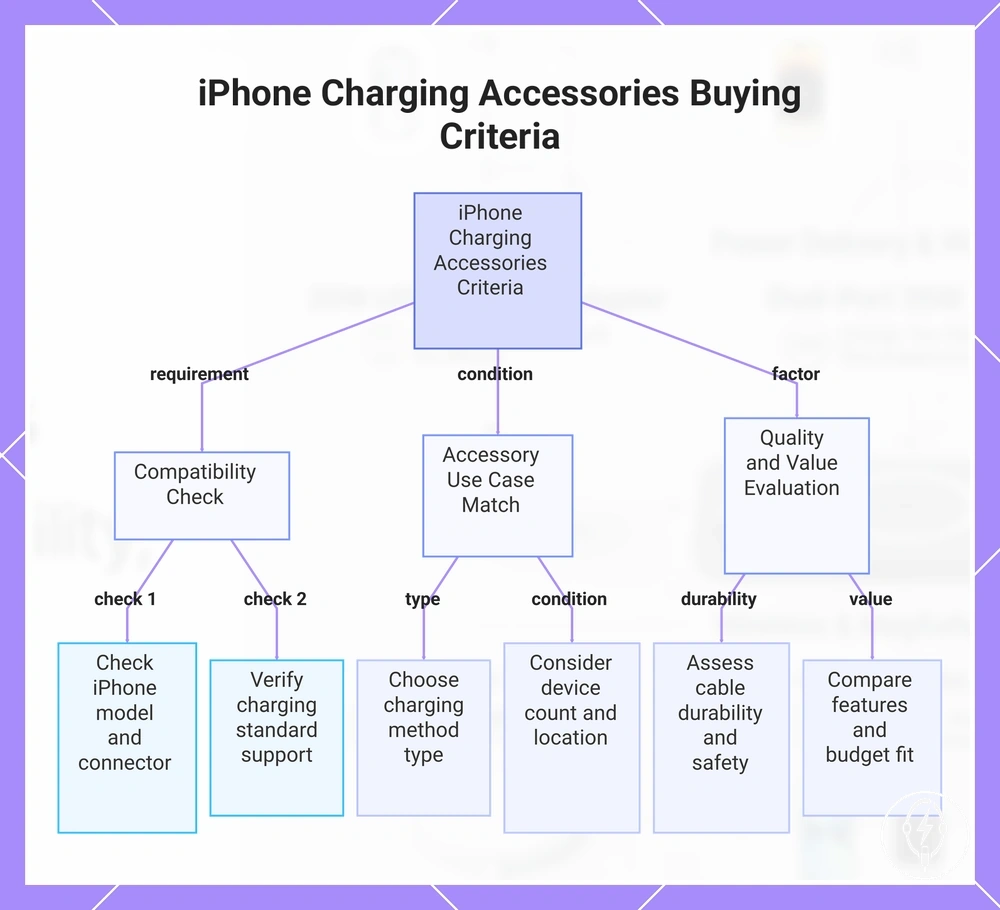
Buying criteria for iPhone charging accessories should begin with compatibility and the intended use case before price because an incompatible accessory cannot deliver the intended charging method. According to Apple, buyers should first confirm the iPhone model, connector type, and supported charging standard, then evaluate the charging location, portability, durability, safety cues, value, and budget fit. These criteria provide a practical framework for creating a shortlist before comparing individual accessories. :contentReference[oaicite:0]{index=0}
These criteria provide a practical framework for creating a shortlist before comparing individual accessories.
Compatibility determines whether an accessory supports the iPhone model, while the accessory type should match the intended charging method and environment. According to Apple, compatible fast charging requires a supported iPhone model, a compatible USB-C cable, and a 20 W or higher USB-C power adapter, whereas wireless charging requires a compatible Qi or MagSafe charger and correct device alignment. For example, a user charging one iPhone during daily commuting may only require a compact wired charger, while a household charging three compatible devices from one location may reduce cable clutter by choosing a multi-device charging station. :contentReference[oaicite:1]{index=1}
These decision signals help narrow suitable accessories before detailed product comparisons.
Cable quality, durability, and safety cues become the next buying criteria after compatibility has been confirmed. Durable cable construction, reinforced strain relief, and manufacturer-stated compatibility or recognised certification can improve long-term reliability, while value and budget fit should be assessed by comparing useful features rather than selecting the lowest purchase price alone. These decision signals help narrow suitable accessories before detailed product comparisons. :contentReference[oaicite:2]{index=2}
Use the checklist below to separate essential compatibility checks from preference-based buying decisions.
Once these buying criteria have been applied, readers can evaluate individual accessory categories in greater detail through how to choose iPhone charging accessories. Use the checklist below to separate essential compatibility checks from preference-based buying decisions. :contentReference[oaicite:3]{index=3}
- Must-have compatibility: Confirm that the accessory supports the correct iPhone model, connector type, and charging standard.
- Must-have accessory type: Match the charging method to the primary use case by choosing wired, wireless, magnetic, portable, or multi-device charging.
- Must-have speed need: If faster charging is required, verify support for a compatible USB-C cable and a 20 W or higher USB-C power adapter on supported iPhone models.
- Must-have device count: Select a multi-device charging station when two or more compatible devices are regularly charged together.
- Preference-based cable quality: Prefer durable cable construction with reinforced strain relief for frequent daily connection and disconnection.
- Preference-based safety cues: Look for manufacturer-stated compatibility and recognised certification where applicable.
- Preference-based durability: Match the accessory to the expected travel frequency, cable handling, and charging environment.
- Preference-based value and budget fit: Compare features, expected lifespan, and charging requirements before comparing prices.
This chart shows the essential buying criteria for iPhone charging accessories, organized by compatibility, use case, and quality evaluation.
Use Case, Portability, and Charging Location
The appropriate iPhone charging accessory is determined by the use case, portability, and charging location because each charging environment has different space constraints, power access, and device count requirements. Daily charging at a home desk or bedside generally favours a fixed charging setup, while charging in a car, during a commute, or throughout travel prioritises compact accessories and portable backup power. Matching the charging context to the accessory narrows the most practical accessory fit and buying decision. :contentReference[oaicite:0]{index=0}
Matching the charging context to the accessory narrows the most practical accessory fit and buying decision.
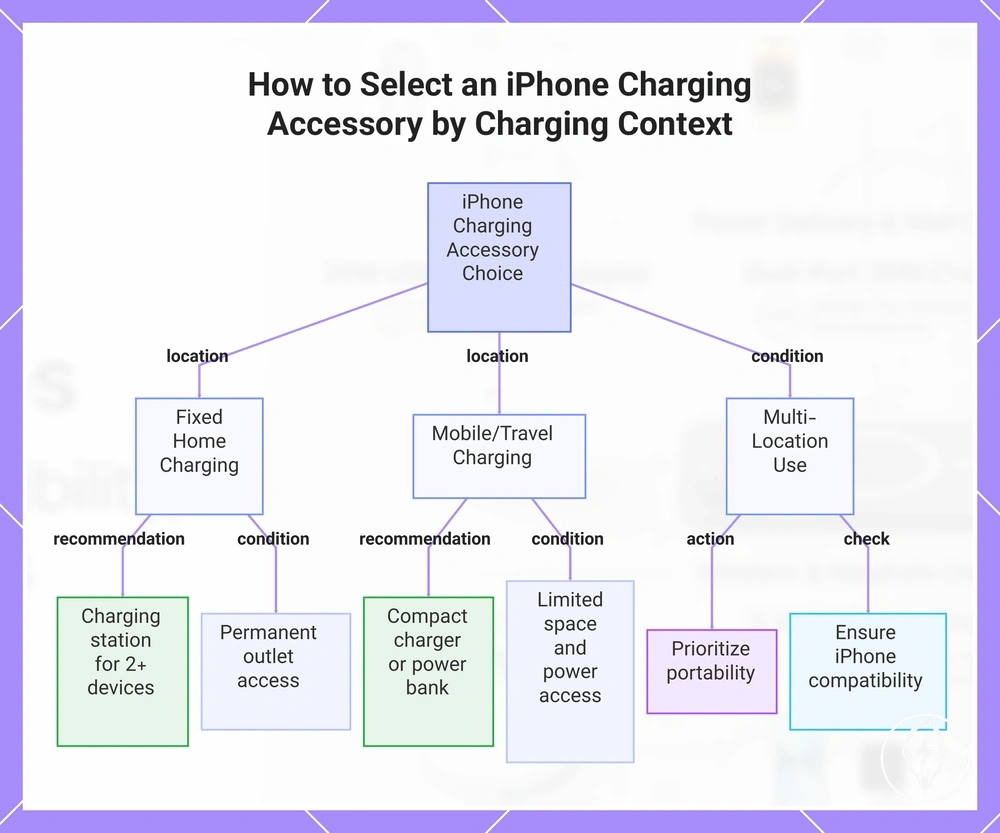
Portability depends on available bag space, power access, and whether the charging setup supports one device or a multi-device routine. A charging station is most suitable where outlet access is permanent, such as a home desk or bedside, whereas a compact charger or power bank is better suited to commuting or travel where carrying space is limited and outlet access may be unavailable. If the same accessory needs to support both home and mobile charging locations, prioritise a portable setup that remains compatible with the iPhone model and intended charging method. :contentReference[oaicite:1]{index=1}
Portability depends on available bag space , power access , and whether the charging setup supports one device or a multi-device routine.
Select the accessory by matching the charging situation to its primary location and constraint:
- Choose a charging station for a home desk or bedside when two or more compatible devices are charged regularly.
- Select a compact charger or power bank for a car, commute, or travel where power access is limited or unavailable.
- Consider space constraints by choosing compact or foldable accessories when bag space is restricted.
- Match the accessory to the expected device count; a multi-device setup benefits from shared outlet access, while a single-device routine usually requires only one charger.
- If one accessory will be used across multiple charging locations, prioritise portability without compromising compatibility with the iPhone model and charging method.
This chart shows how to choose an iPhone charging accessory based on charging location, portability, and device count.
Cable Quality, Safety, Durability, and Value
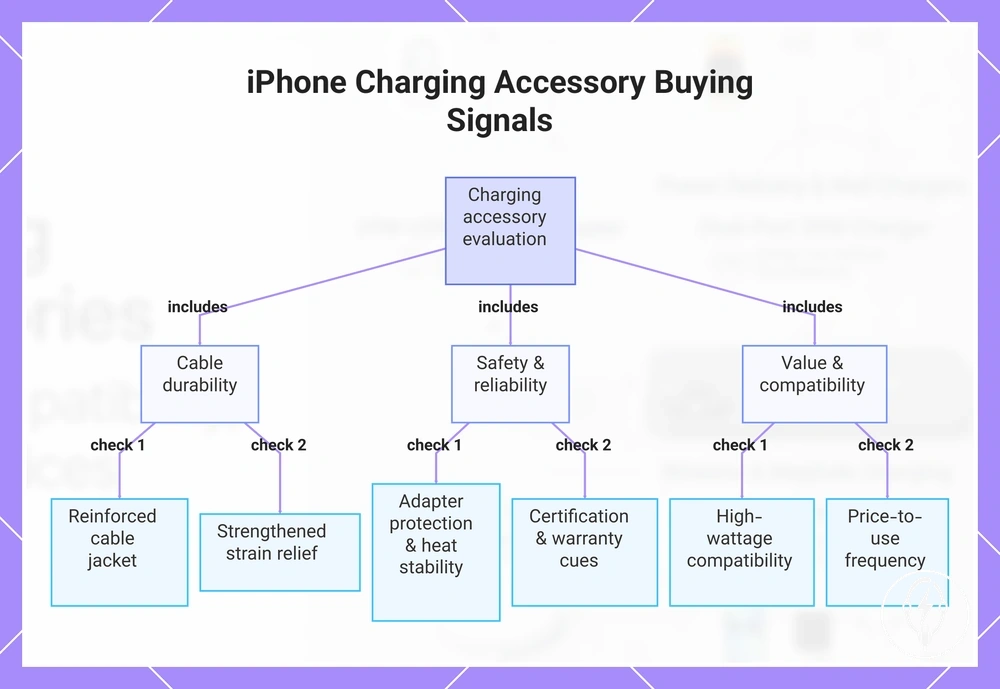
Cable quality, safety, durability, and value should be evaluated together because they are practical buying signals for iPhone charging accessories rather than marketing labels. The most useful decision signals are the cable jacket, connector strain relief, adapter protection, heat behavior, certification indicators, warranty cues, and price-to-use frequency, which together indicate build quality, reliability, and suitability for the intended charging environment. These signals should be assessed collectively instead of relying on promotional claims alone. :contentReference[oaicite:0]{index=0}
These signals should be assessed collectively instead of relying on promotional claims alone.
A durable charging cable typically uses a reinforced cable jacket and strengthened strain relief at both connector ends because these locations experience the greatest bending stress during repeated use. Adapter protection features and stable heat behavior should support normal operating conditions without implying guaranteed safety, while recognised certification indicators and clear warranty cues provide additional evidence of manufacturer confidence. A high-wattage charger provides value only when its output is compatible with the iPhone's charging requirements, whereas a durable, appropriately certified charger that is used every day generally offers a better price-to-use frequency than a lower-priced accessory that requires earlier replacement. :contentReference[oaicite:1]{index=1}
A durable charging cable typically uses a reinforced cable jacket and strengthened strain relief at both connector ends because these locations experience the greatest bending stress during repeated use.
Evaluate these buying signals together before comparing similar iPhone charging accessories:
- Inspect the cable jacket for durable construction suited to the expected level of daily handling.
- Check that strain relief is reinforced at both cable ends to reduce stress from repeated bending.
- Confirm that the charger includes appropriate adapter protection features and demonstrates stable heat behavior during compatible charging.
- Look for recognised certification indicators together with clear warranty cues as reliability signals.
- Choose a high-wattage charger only when its output matches the compatible charging capability of the iPhone model.
- Compare price-to-use frequency by balancing purchase cost against expected durability and how often the accessory will be used.
This chart shows the key buying signals to evaluate collectively when choosing an iPhone charging accessory, covering cable durability, safety and reliability, and value considerations.
Common Accessory Sets for Everyday iPhone Charging
Accessory sets for everyday charging should combine compatible parts around a real charging situation rather than around individual accessories. The appropriate set is determined by the iPhone model, charging method, charging location, and fit condition, so each accessory combination should include only the components required for that specific use case. This accessory-set logic helps create practical charging setups without adding unnecessary or incompatible accessories. :contentReference[oaicite:0]{index=0}
Each charging pattern combines compatible accessories for a different everyday situation.
Each charging pattern combines compatible accessories for a different everyday situation. A cable-and-adapter set pairs a compatible charging cable with a compatible power adapter for wired charging, while a wireless bedside setup combines a compatible wireless charger with a stable charging surface where placement and alignment support convenient overnight charging. A compact travel kit combines a compact adapter, charging cable, and optional power bank when portability and outlet access are limited, whereas a portable backup setup centres on a power bank and compatible cable for charging away from fixed power sources. A multi-device station combines dedicated charging positions for an iPhone and other compatible devices in one organised location. For additional examples of practical charging combinations, see iPhone charging setup options. :contentReference[oaicite:1]{index=1}
For additional examples of practical charging combinations, see iPhone charging setup options .
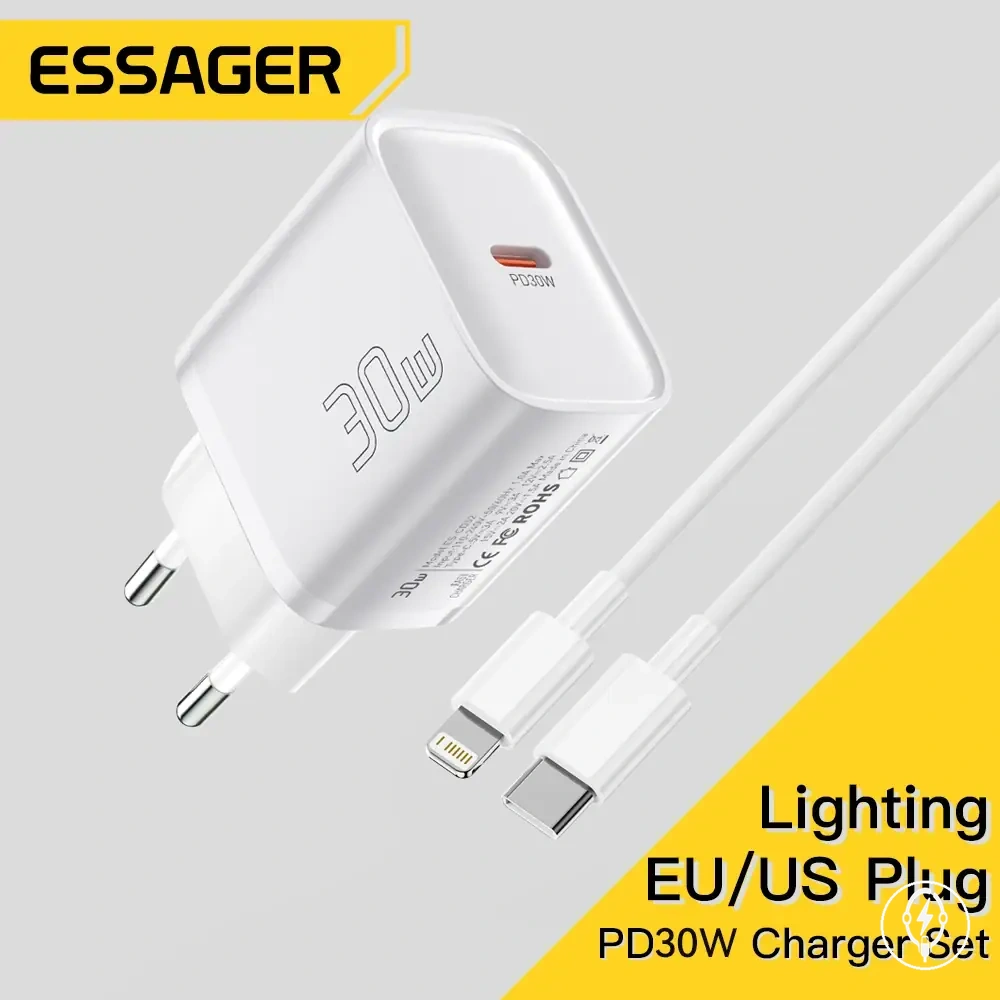
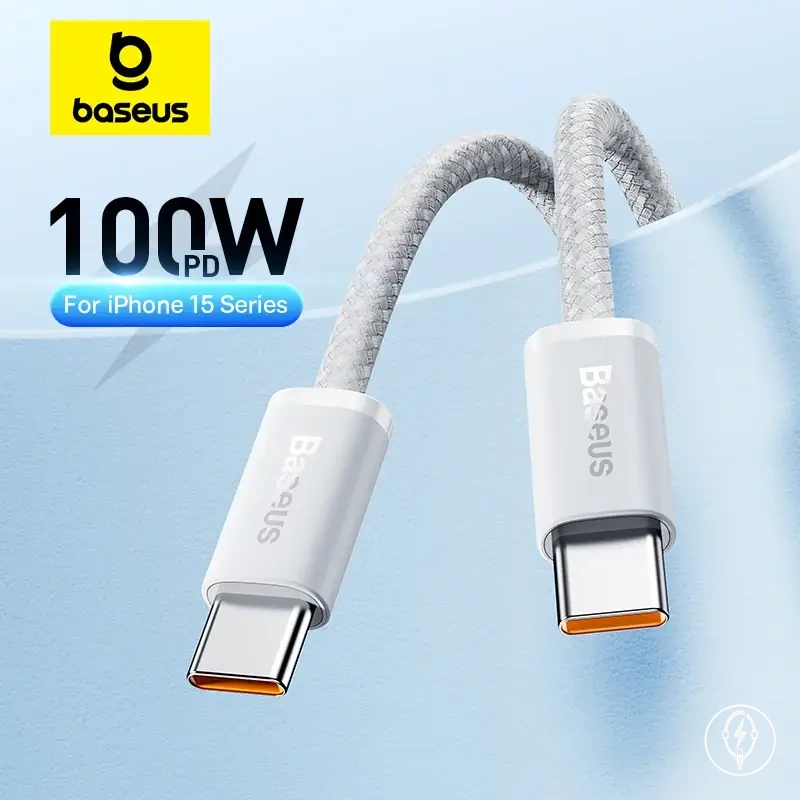
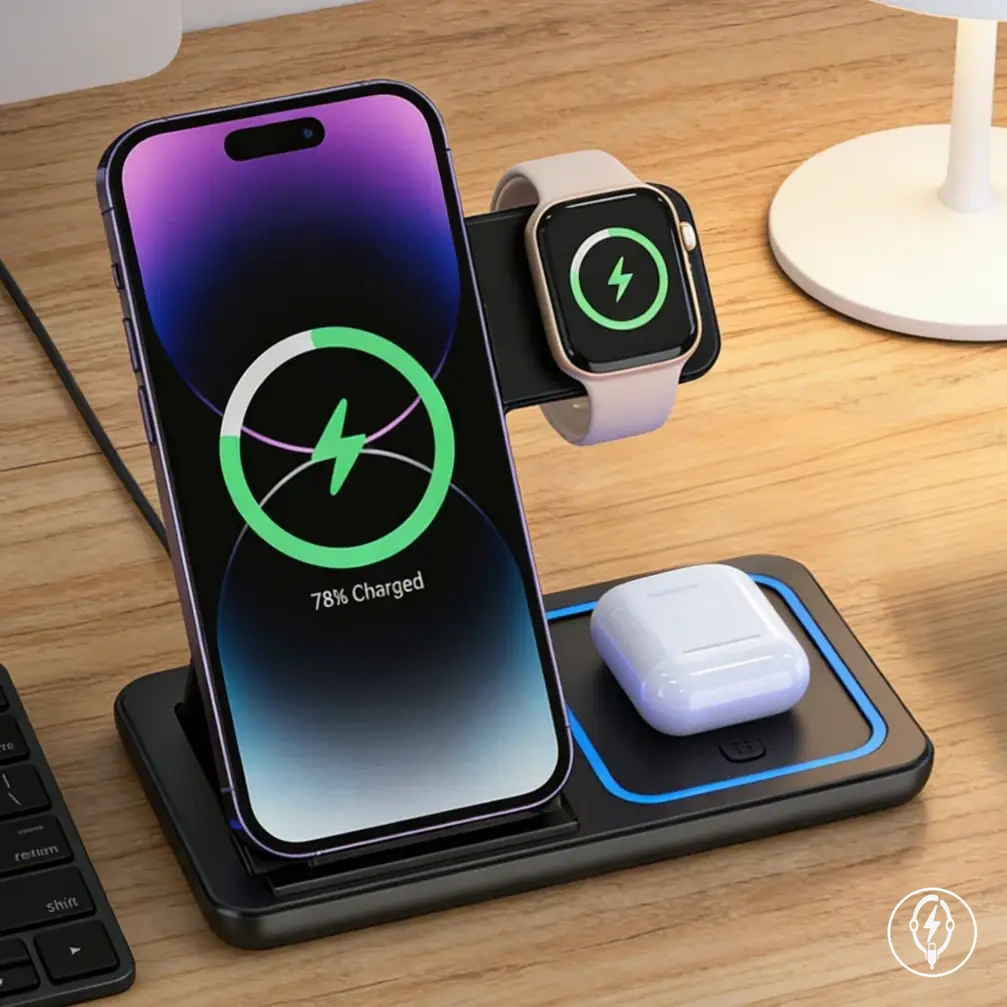
The examples below illustrate common charging combinations rather than product rankings, and each accessory set should be selected according to the intended charging situation. For example, a commuter carrying one iPhone may only require one compatible cable, one compact adapter, and one portable charger, while a household regularly charging three compatible devices from one bedside location may find a multi-device station more suitable because it organises charging in one fixed place without changing compatibility requirements.:contentReference[oaicite:2]{index=2}
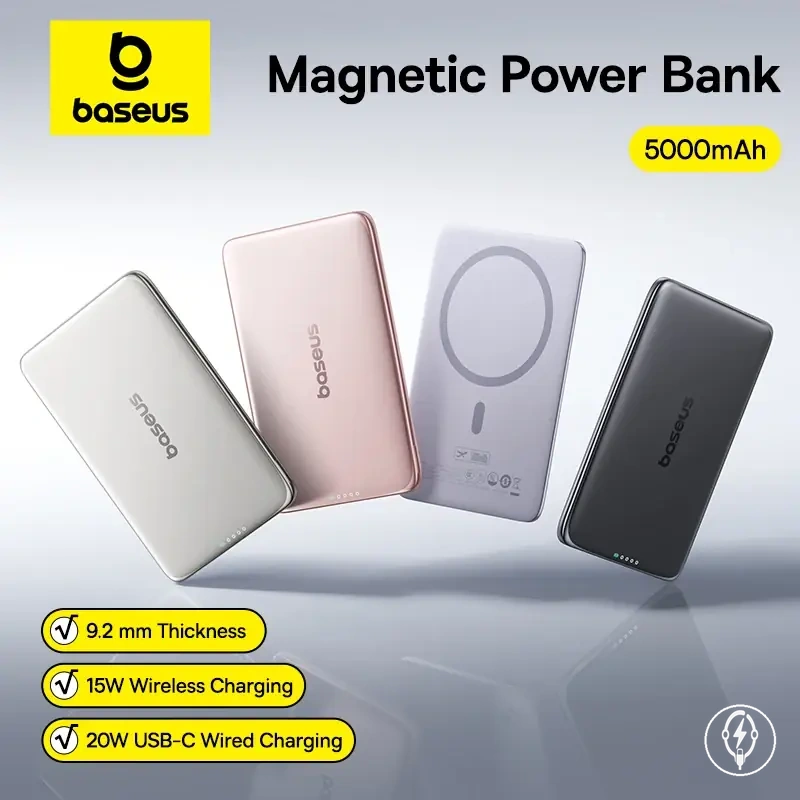
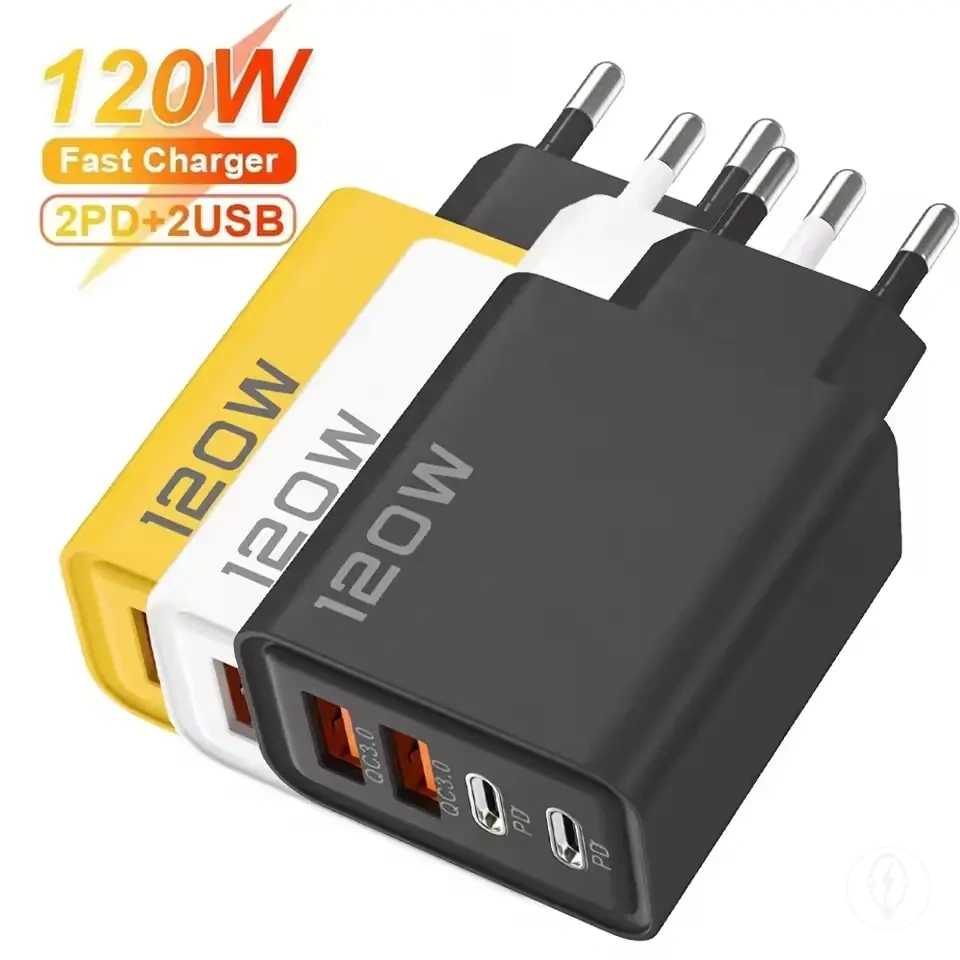
The products below are useful examples for comparing available options.
The products below are useful examples for comparing available options. Before buying, check that the compatibility criteria, key features, and product details match your needs.
| Accessory Set | Included Accessory Roles | Likely Fit Condition |
|---|---|---|
| Cable-and-adapter set | Compatible charging cable and compatible power adapter | Everyday wired charging at home, work, or school |
| Wireless bedside setup | Compatible wireless charger and fixed charging surface | Bedside charging where convenience and consistent placement are priorities |
| Compact travel kit | Compact adapter, charging cable, and optional portable charger | Travel or commuting with limited bag space and variable outlet access |
| Portable backup setup | Power bank and compatible charging cable | Charging away from wall outlets during commuting or travel |
| Multi-device station | Charging station for an iPhone and other compatible devices | Fixed charging location where two or more compatible devices are charged regularly |